Bootheel Harvest Margin Squeeze: Can Input and Fuel Shock Change the 2027 Crop Before 2026 Harvest Is Finished?
With national diesel at a record $6.285/gal and fall 2026 fertilizer benchmarks up double digits year-over-year, is the cost of finishing the 2026 Bootheel harvest and prepaying 2027 inputs at the same time material enough to change 2027 crop mix and lender exposure — and can that be shown at the county level, not just nationally?
Short Answer
Here's the part that should bother more people than it does: Bootheel farmers are being asked to make their 2027 fertilizer decisions in the same six weeks they're still paying record diesel prices to finish the 2026 harvest. That's not a metaphor — it's the literal fall prepay calendar. I went looking for a clean local number that would tell you exactly how much that two-season overlap costs a real Dunklin County rice-and-soybean operation, and the honest answer is that the number doesn't exist publicly yet. What does exist is a named, on-the-record Bootheel grower who already lived through one version of this math in 2026 and switched crops because of it, a national fertilizer market that's pricing the *next* version of that math worse, not better, and a local lender whose own credit-quality numbers started sliding before any of this fall pressure even showed up. Status: investigating.
Why Fall in the Bootheel Has Always Been Two Seasons Wearing One Calendar Page
This region doesn't get a clean break between "this year's crop" and "next year's crop." The Little River Drainage District spent 1914 to 1928 cutting more than a hundred miles of levees and ditches through what used to be the Mississippi River's overflow swamp, turning it into some of the flattest, most fertile row-crop and rice ground in the country — and also some of the most input-intensive. Flood-irrigated rice, furrow-irrigated soybeans, propane or diesel-fired grain dryers, and gravity-drained gravel roads all mean this land converts fuel and fertilizer into yield at a rate a dryland Corn Belt farm simply doesn't match. That's the backdrop for why fall here has always carried two jobs at once: finish paying for the crop in the ground, and lock in — or delay — the inputs for the crop that isn't planted yet. Most years, that overlap is a scheduling inconvenience. This year, both halves of it got expensive at the same time.

How This Connects
open_with Drag nodes to rearrange, tap one for the evidence behind it — pinch or scroll to zoom.
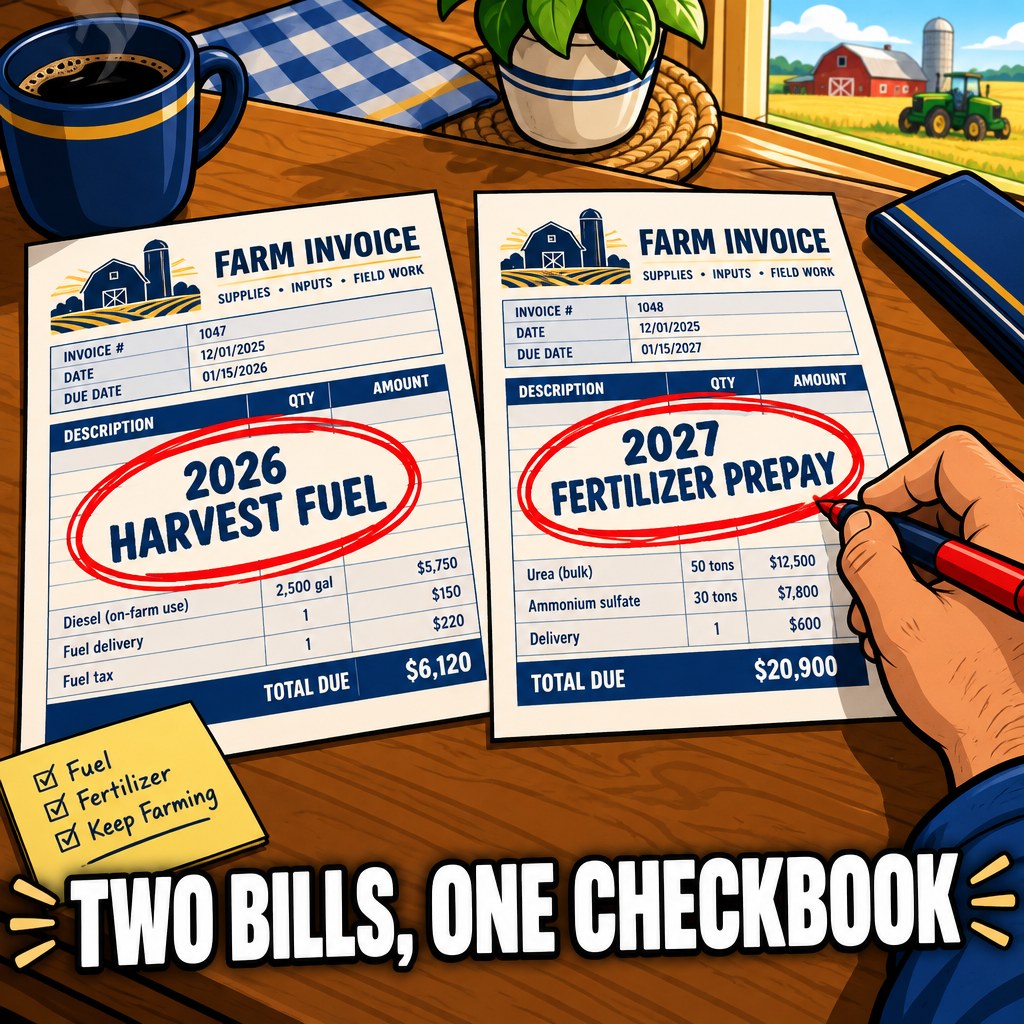
A diagram makes this look tidy. Living it doesn't feel tidy at all — it feels like two bills arriving in the same mailbox, one for a crop that's still in the field and one for a crop that isn't planted yet, and a single checking account that has to cover both.
The Policy Lever That's Supposed to Help Arrives on a Different Clock Than the Cost Shock
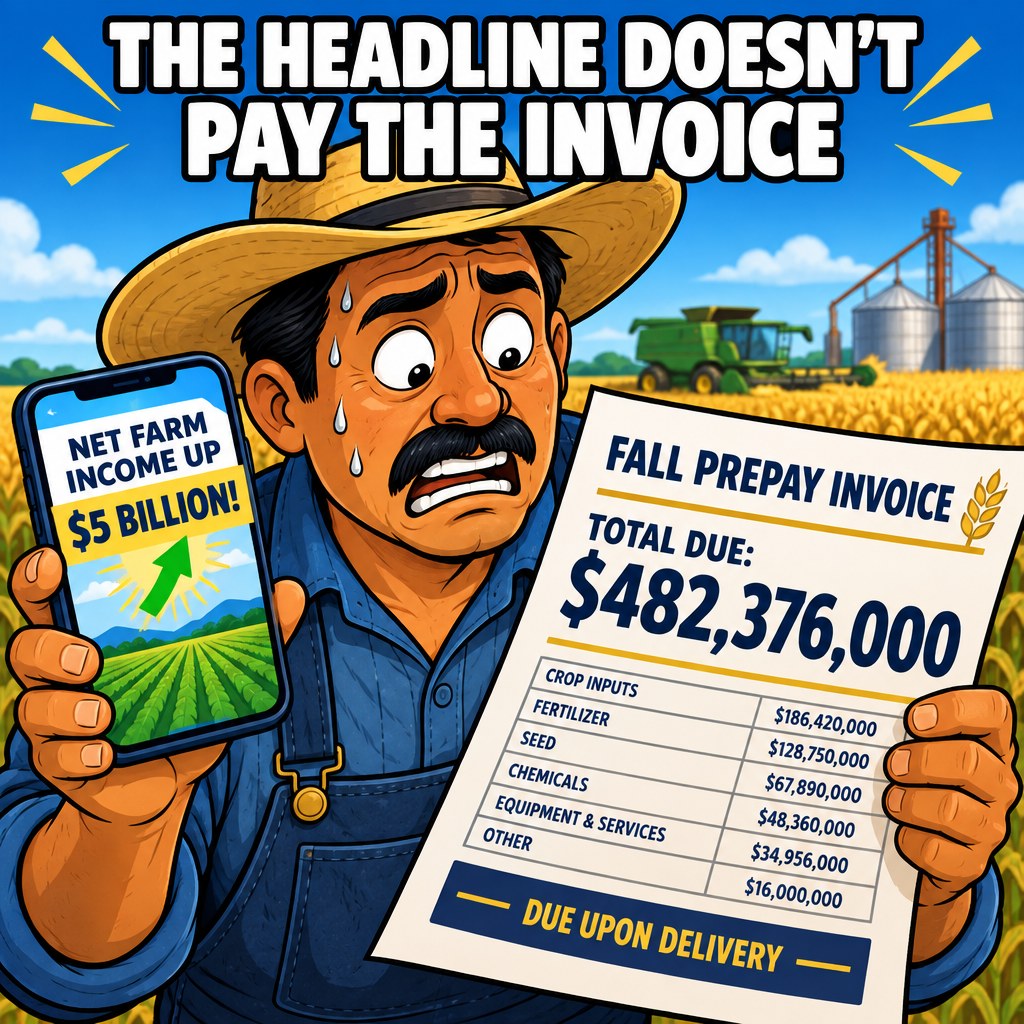
USDA's Economic Research Service raised its 2026 net farm income forecast to $158.4 billion in September — $5 billion higher than its February read — helped along by a projected $47.4 billion in direct government farm payments, a roughly 70% jump over 2025. That's real money, and it's part of why the national headline reads better than the on-the-ground cost story does. (USDA ERS — Farm Sector Income Forecast, updated Sep 3, 2026) But total production expenses are forecast at $492.8 billion, up 4.5% — with fertilizer/lime/soil-conditioner spending alone up 15.3% to $39.6 billion and fuel/oil up 28.8% to $21.6 billion, both driven substantially by the same Iran-conflict energy and shipping disruption that's shown up in every Bootheel-adjacent investigation on this site this month.
That's the tension worth naming plainly: government payments are calculated and disbursed on an annual, after-the-fact cycle. Fall fertilizer prepay decisions get made now, in real time, against spot prices that don't wait for a farm-income forecast to catch up. A producer deciding this week whether to lock in 2027 nitrogen isn't pricing against $158.4 billion in national net farm income — he's pricing against whatever anhydrous costs at his local co-op today, with a payment that may or may not show up in his account before the invoice is due.
The Numbers So Far
Three charts, three different jobs. The first shows the fuel shock is genuinely volatile and just set a record during harvest, not a one-time spike that already passed. The second shows the market a fall 2027 prepay decision gets priced against is elevated across all three major nutrients, most sharply on nitrogen. The third is the one that actually answers something local: a named Bootheel rice grower already lived through this math once in 2026, in writing, and moved acres because of it.
Where This Is Happening
What a Named Bootheel Grower Actually Said, Twice, in Writing
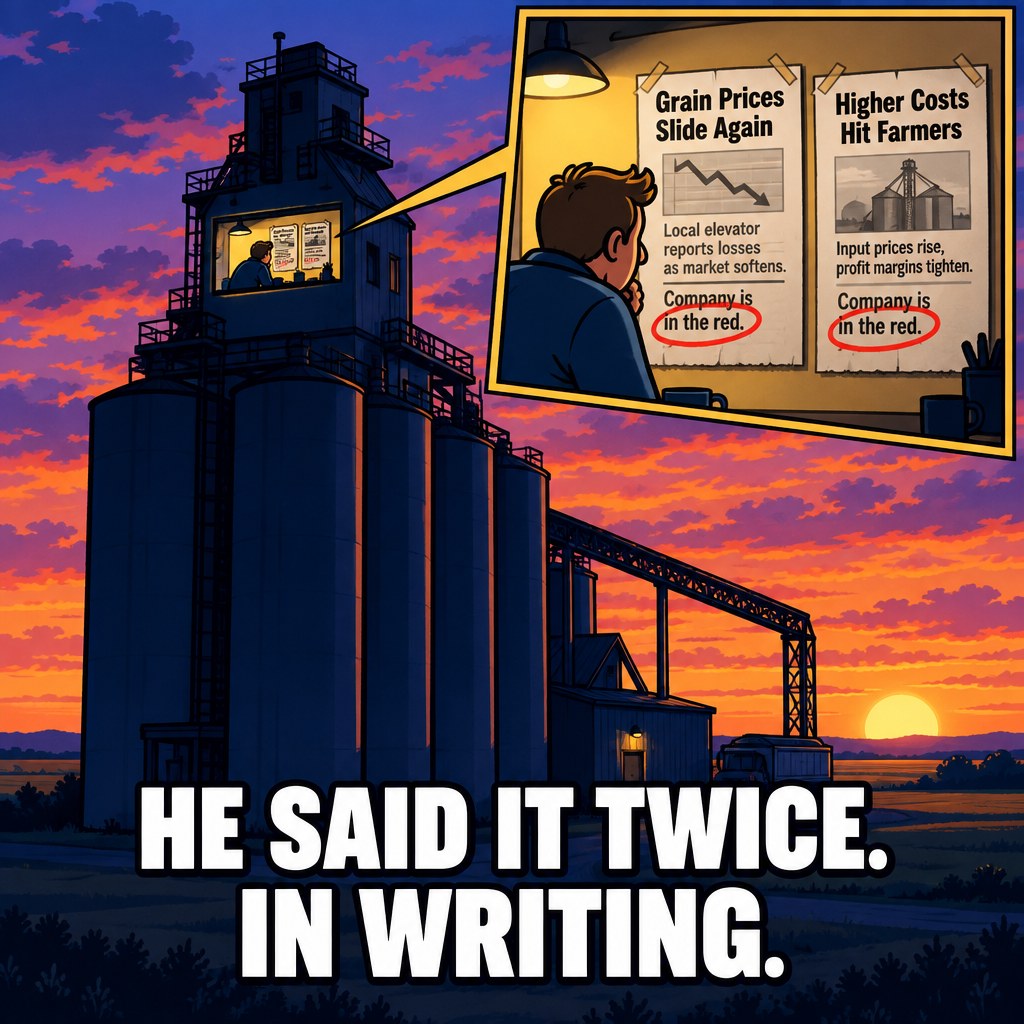
This is the part of the investigation that kept it honest. In April 2026, Rance Daniels told Brownfield Ag News: "You let urea go up $250 to $300 and fuel go up $1.50 per gallon, it really puts it in the red. We've shifted acres to more soybeans." Three months later, in July, he was back on the record — this time as Chairman of the Missouri Rice Council, not just as a grower — with the gap even wider: urea "$300 to $350, a ton more expensive this year versus 2025," against a rice price that was "maybe a dollar more than last year." His own summary of that math: "The market is up a little, but not near the percentage that input costs have risen." (Brownfield Ag News, Apr 7, 2026; Brownfield Ag News, Jul 31, 2026)
That's a real producer, named, in a Bootheel county, describing the exact mechanism this article is chasing — and he described it about the 2026 crop, before fall 2027 prepay pricing even entered the picture. Whatever number shows up on his fertilizer invoice this fall is layered on top of a season he's already on record calling "in the red."
One more honest caveat belongs here: MU Extension's Soybean Growth and Yield Report (Andres Reis, soybean farming systems specialist) flagged declining 2026 yield projections statewide as of Aug 19, 2026 — but the largest declines are concentrated in northern Missouri, not the Bootheel, and April-planted soybeans in central and southwest Missouri were still holding above-average yield potential as of that report. The Bootheel's own irrigation infrastructure — covered in our companion investigation into groundwater and pumping economics here — is part of why this region's yield risk this season reads differently than the state's. This article's cost pressure is real and county-verified; the yield-decline story making national soybean headlines this season is a different, mostly-northern-Missouri story, and conflating the two would misstate both.
Methodology
This pass combined the USDA AMS Grain Transportation Report (Sep 17, 2026), USDA ERS's Farm Sector Income Forecast (Sep 3, 2026), USDA NASS Crop Production (Sep 11, 2026), farmdoc daily's Aug 7, 2026 fertilizer-and-fuel price roundup, two dated Brownfield Ag News interviews with a named Dunklin County grower, MU Extension's Soybean Growth and Yield Report reporting, and Farm Credit Southeast Missouri's own Q1/Q2 2026 stockholder filings (via our companion credit-stress investigation). It explicitly does not include: an actual local fall 2026 fertilizer prepay quote from a Bootheel co-op or input dealer, a producer-level working-capital or operating-line figure, a crop-specific breakeven or switch-threshold calculation for rice vs. soybeans vs. cotton vs. corn, or a third disclosed Farm Credit SEMO quarter (the association's most recent public filing still ends June 30, 2026 — before the September diesel record). MU Extension's own Southeast Missouri irrigated soybean planning budget (Publication G659) exists and is revised annually, but its per-acre cost tables weren't extractable from the source PDF during this research pass — that's a named gap to close on the next pass, not a number I'm willing to guess at.
Moral of the Story
If you're a Bootheel row-crop or rice producer, the concrete thing to do this month isn't to wait for a clean answer — it's to ask your fertilizer dealer for an actual written fall 2027 prepay quote now, this week, and compare it line-by-line against what you paid a year ago. Rance Daniels already did the informal version of that math out loud; a written quote turns it into something you can actually plan a crop-mix decision around instead of a gut feeling.
If you're a lender in this territory, Farm Credit SEMO's own disclosed numbers only run through June 30 — before this diesel record and before fall prepay pricing. That makes the next quarterly filing genuinely informative in a way this one isn't yet: watch specifically for whether the classification trend accelerates, holds, or breaks, because that quarter is the first one structurally capable of showing this two-season effect.
If you're an input dealer or co-op, you're sitting on the one number that would actually resolve this article's open question — what you're quoting Bootheel growers for fall 2027 delivery, right now. Publishing even a range would do more to inform the region's crop-mix decisions this fall than another national forecast will.
If you're just trying to understand why farm country doesn't feel as good as the national net-farm-income headline sounds, this is the mechanism in miniature: a national income number calculated in arrears, sitting on top of a real-time, county-level cost shock that a named grower is already describing as pushing him into the red — twice, four months apart, in his own words.

Related Research
This investigation builds directly on Diesel Just Hit $6.285. What Does That Actually Cost a Bootheel Farm?, Farm Credit SEMO's Crop Loan Stress Is Rising. What Is Driving It?, and Congress Just Made Rice More Profitable. So Why Are Bootheel Farmers Planting Less of It? — the structured fields below (who we'd like to talk to, what we still need, our sources) carry the parts of this investigation that update independently of the write-up above.
Where This Stands
Investigating
Our Best Guess So Far
A Dunklin County rice grower's own on-record account shows fuel and fertilizer cost increases in 2026 large enough to force a real crop-mix shift toward soybeans. National fall-2026 fertilizer benchmarks (anhydrous, DAP, potash) are elevated year-over-year heading into the fall prepay window for the 2027 crop, and national diesel just set a record mid-harvest. If those two facts compound at the local level the way the Dunklin County account suggests they already have once, fall 2027 prepay decisions could push further acreage shifts and show up in Farm Credit SEMO's next disclosed credit-quality numbers — but that's a hypothesis built from one named grower's account plus national benchmarks, not yet a county-verified prepay quote or a lender disclosure that actually covers this window.
What Got Us Asking This
- linkUSDA AMS — Grain Transportation Report, Sep 17, 2026 — National diesel hit a record $6.285/gal for the week ending Sep 14, 2026 — 254.6 cents above the same week in 2025.
- linkfarmdoc daily — Fertilizer and Fuel Prices Higher Heading into Fall 2026 — Aug 7, 2026 national/Midwest benchmarks: anhydrous ammonia $915.50/ton (+16% YoY), DAP $912.22/ton (+7% YoY), potash ~$500/ton (+2.5% YoY); diesel $4.65/gal that week.
- linkBrownfield Ag News — SEMO farmer cuts rice acres as fuel, fertilizer costs surge (Apr 7, 2026) — Rance Daniels, Dunklin County: urea up $250-300/ton, fuel up $1.50/gallon, 'it really puts it in the red' — shifted acres to soybeans.
- linkBrownfield Ag News — Missouri rice farmer: higher fertilizer costs outpace gains in rice prices (Jul 31, 2026) — Rance Daniels, Chairman of the Missouri Rice Council: urea up $300-350/ton vs. 2025; rice price up only about $1/bu.
- linkUSDA NASS — Crop Production, Sep 11, 2026 — Missouri all-rice planted acreage fell from 213,000 (2025) to 118,000 (2026), -44.6%; soybean acreage rose from 5.6M to 5.95M acres.
- linkUSDA ERS — Farm Sector Income Forecast, Sep 3, 2026 — 2026 net farm income forecast $158.4B (+$5B vs. February); total production expenses $492.8B (+4.5%); fertilizer/lime/soil-conditioner +15.3% to $39.6B; fuel/oil +28.8% to $21.6B; direct government payments $47.4B (+70%).
How This Connects
The Physical Side
Flood-irrigated rice, furrow-irrigated soybeans, grain dryers, and gravel-road hauling — all fuel-intensive — plus fall fertilizer application/prepay for the 2027 crop, overlapping the same six-to-eight-week window as 2026 harvest completion.
The Money Side
2026 harvest operating costs (diesel, drying) and 2027 prepay input commitments draw on the same working-capital line at the same time; Farm Credit SEMO's disclosed credit-quality trend is the one public proxy for how that's landing.
The Day-to-Day Work
Growers, input dealers/co-ops, Farm Credit SEMO, and the Missouri Rice Council sit at the center; national USDA and industry price reporting sets the backdrop each local decision gets made against.
The Data/Systems Side
National diesel and fertilizer benchmarks are public and current; actual local fall prepay quotes, county-level working-capital figures, and the next Farm Credit SEMO disclosed quarter are not yet public.
Who We'd Like to Talk To
- Bootheel rice/soybean/corn/cotton producers
- Farm Credit Southeast Missouri (Greg Cunningham, President & CEO)
- Missouri Rice Council (Rance Daniels, Chairman)
- Local fertilizer dealers and input co-ops
- MU Extension agricultural economists
What We Still Need
- An actual local fall 2026 fertilizer prepay quote from a Bootheel co-op or input dealer, by crop
- Producer-level working-capital or operating-line data for the two-season window
- A crop-specific breakeven or switch-threshold calculation (rice vs. soybeans vs. cotton vs. corn) built on real local input costs
- Farm Credit SEMO's next disclosed quarter (current filings end June 30, 2026 — before the September diesel record)
- MU Extension's Southeast Missouri irrigated soybean planning budget (G659) per-acre cost tables — not extractable from the source PDF this pass
What We'll Build From This
- A two-season crop budget calculator once local fall prepay quotes exist
- A tracker for Farm Credit SEMO's quarterly classification rate against the fall prepay window, to see when (or if) this shows up in disclosed credit data
What We Found
The mechanism is real and partially county-verified, not just national: a named Dunklin County rice grower (Rance Daniels, Chairman of the Missouri Rice Council) is on the record twice in 2026 describing fuel and fertilizer cost increases large enough that he shifted acres from rice to soybeans, and Missouri's state-level rice acreage fell 44.6% year-over-year in the same period. National diesel just set a record mid-harvest ($6.285/gal), and national fall-2026 fertilizer benchmarks are elevated double digits year-over-year on nitrogen specifically — the same input Daniels named. What isn't yet verified is whether the 2027 fall prepay version of this math is worse, the same, or better than what Daniels already lived through, because no local fall 2027 prepay quote is public, and Farm Credit SEMO's most recent disclosed credit quarter ends before this window even opens. Status stays investigating.
Sources
- linkUSDA AMS — Grain Transportation Report, Sep 17, 2026
- linkfarmdoc daily — Fertilizer and Fuel Prices Higher Heading into Fall 2026
- linkBrownfield Ag News — SEMO farmer cuts rice acres as fuel, fertilizer costs surge
- linkBrownfield Ag News — Missouri rice farmer: higher fertilizer costs outpace gains in rice prices
- linkUSDA NASS — Crop Production, Sep 11, 2026
- linkUSDA ERS — Farm Sector Income Forecast, Sep 3, 2026
- linkMU Extension — Missouri Soybean Growth and Yield Report coverage (Grain Journal, Aug 19, 2026)