Florida Finally Has a CRISPR Citrus Product. Can Biology Reverse the Economics of Greening?
Under what survival, yield, tree-price, adoption, and time-to-bearing assumptions does HLB-resistant CarriCea T1 make citrus replanting financially attractive for a Florida grower?
Short Answer
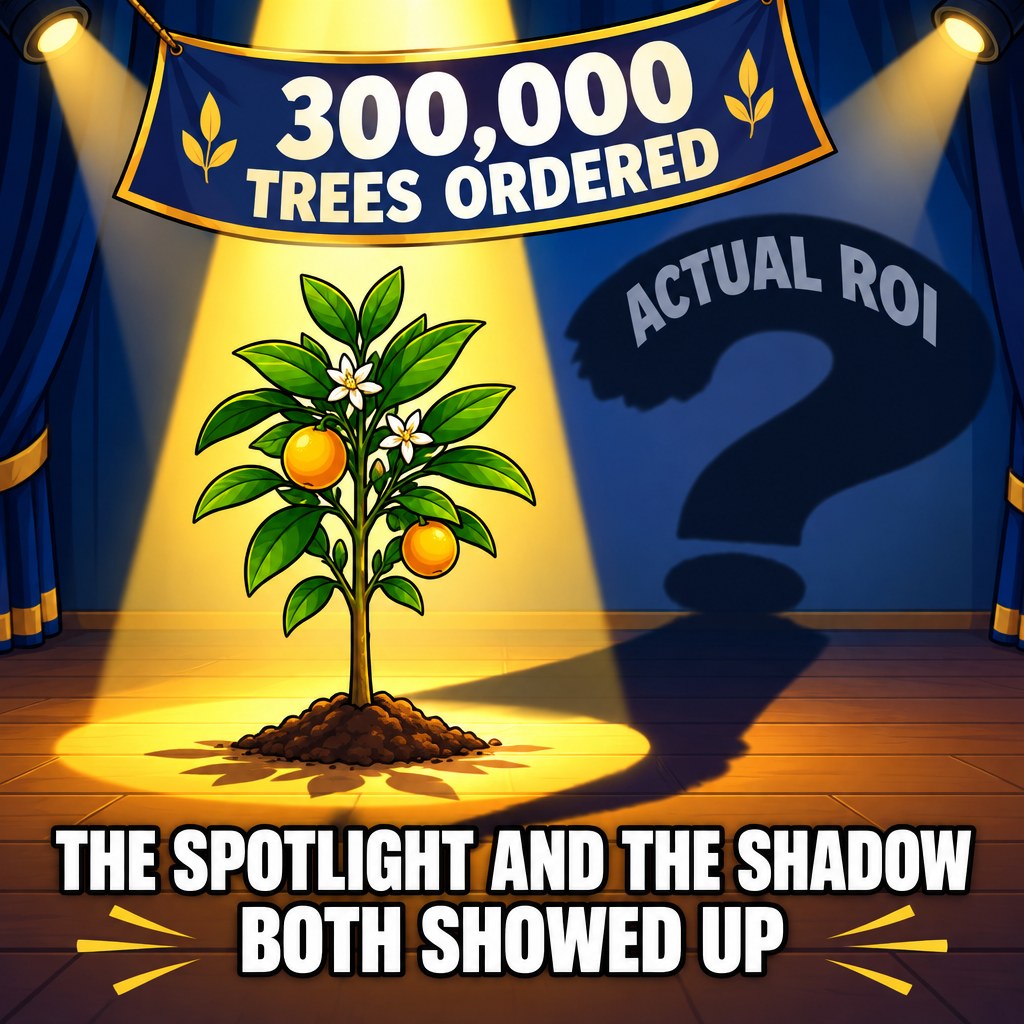
Florida's citrus industry has lost roughly 95% of its production since a bacterial disease called citrus greening (HLB) was first detected in the state in 2005. This August, the EPA cleared a CRISPR-edited, HLB-resistant rootstock — CarriCea T1, developed from University of Florida research and commercialized by Soilcea — for real commercial supply, and growers have already ordered more than 300,000 trees. That is a genuine, verified milestone. It is not, yet, proof that replanting with it pencils out. Status: investigating — the biology and the regulatory approval are real; the economics of actually betting a grove on it are still an open question.
Why "Approved" Isn't the Same Question as "Worth It"
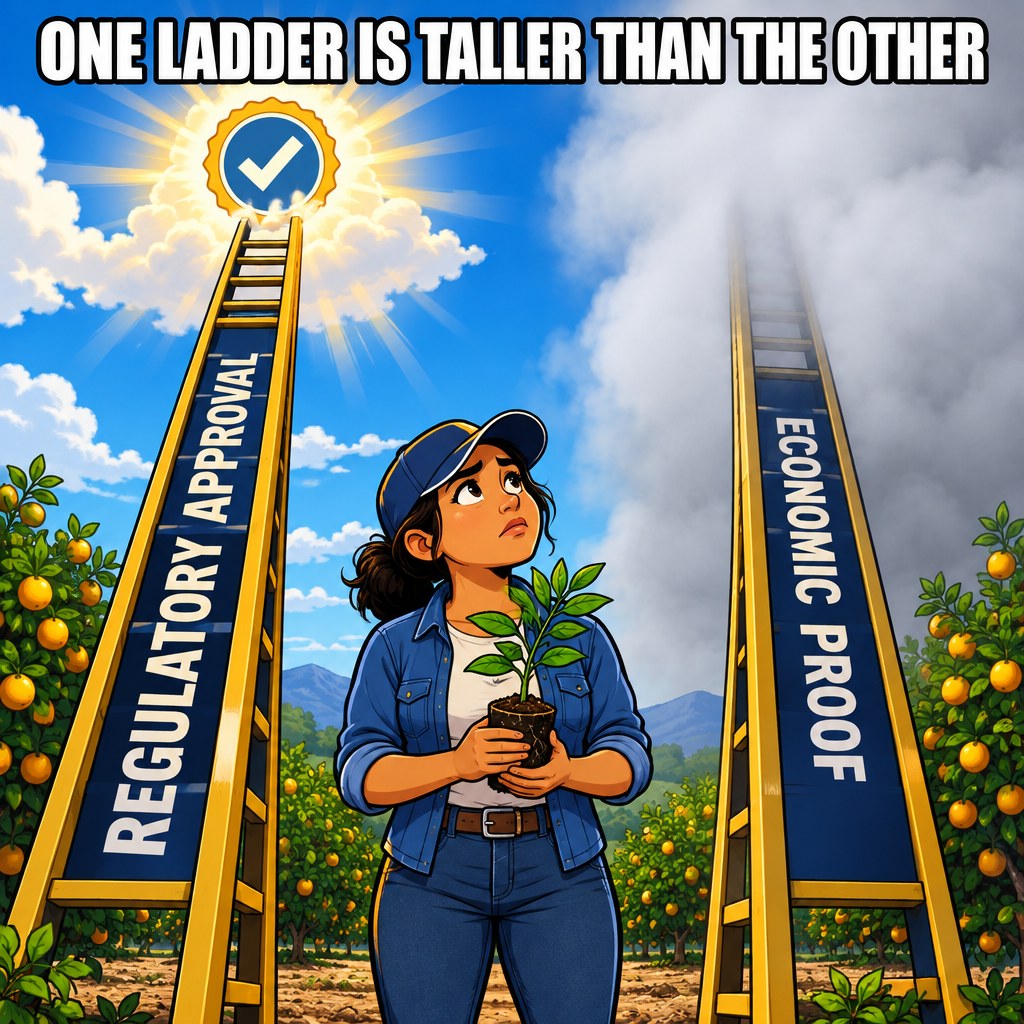
Citrus greening doesn't just reduce yield — it shortens tree life, degrades fruit quality, and forces growers into a replant cycle most had already given up funding. That's the backdrop CarriCea T1 is entering: EPA approval and 300,000+ tree orders prove the technology crossed a real regulatory and commercial-availability gate. They don't prove a typical Florida grower earns a positive return from replanting with it. UF/IFAS's own current guidance is explicit about this: the newest wave of citrus rootstocks — the group CarriCea T1 belongs to — has limited long-term commercial experience, and performance depends heavily on soil, disease pressure, climate, and management. Regulatory readiness and economic readiness are two different ladders, and this technology is only confirmed to have climbed one of them so far. (University of Florida News — "EPA Approves HLB-Resistant Citrus Rootstock Based on UF Research"; UF/IFAS EDIS — Florida Citrus Rootstock Selection Guide, 4th Edition)
The Technology, in Plain Terms
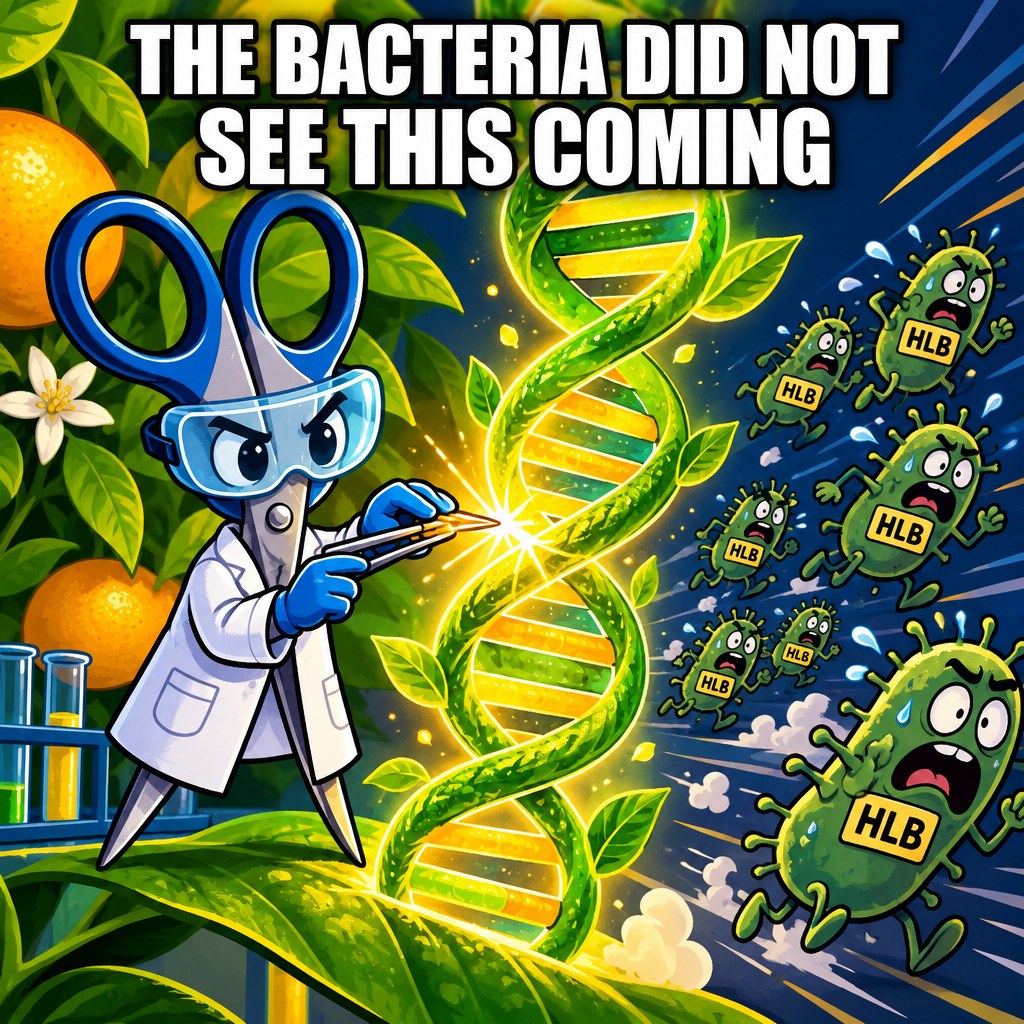
CarriCea T1 uses CRISPR gene-editing on rootstock genetics to disrupt how the greening-causing bacterium interacts with the tree, limiting infection rather than curing an already-infected plant. It's licensed from UF research and brought to commercial scale by Soilcea. The EPA's own announcement frames it as a tool "to help prevent widespread loss of citrus crops and support America's food supply" — regulator language that reflects how severe the underlying crisis already is, not a guarantee of grower-level payback. Notably, USDA considers fruit from this rootstock non-bioengineered, which matters for how it moves through the supply chain and how it's marketed. (EPA — "New Citrus Tool to Help Prevent Widespread Loss of Citrus Crops and Support America's Food Supply"; Citrus Industry Magazine — "CarriCea Rootstock Registration Is 'a Major Milestone'")
The Economic Decision Chain
open_with Drag nodes to rearrange, tap one for the evidence behind it — pinch or scroll to zoom.
Readiness Ladder: What's Proven vs. What's Assumed
The industry's own trade press captures the stakes plainly: this registration is being called "a major milestone" precisely because it's rare for any HLB-resistance technology to get this far. That's real. It's also exactly why growers, lenders, and nurseries should watch the *next* milestone — multi-year field performance — as closely as they welcomed this one. (Citrus Industry Magazine, Apr 2026)
Where This Is Happening
Methodology
This pass relied on University of Florida's own news release, EPA's newsroom announcement, UF/IFAS's Florida Citrus Rootstock Selection Guide (4th Edition), and Citrus Industry Magazine trade coverage — all primary or direct-regulator sources. It explicitly did not build a cohort cash-flow model, acquire county-level citrus acreage and disease/quarantine GIS data, or interview a grower, nursery, processor, or lender. This is a computational-economics and capability-mapping question, not a biology one — nothing here proposes or represents wet-lab gene-editing or pathogen work; the open questions are financial and logistical, not scientific.
Moral of the Story
If you're a Florida citrus grower: 300,000 trees already ordered is a real signal other growers believe in this — but "believe in" and "have proof of return on" are different things this season. Ask your nursery for its actual fulfillment timeline before you commit replant-year capital around an assumed delivery date.
If you're a nursery or Soilcea distribution partner: fulfillment timing and regional allocation for 300,000+ trees is the single most consequential unknown in this whole story right now, and it's entirely within your control to make public.
If you're a citrus lender or crop-insurance provider: this is the moment to start asking for the specific variable that would change your underwriting — survival rate, time-to-bearing, or yield-at-maturity — rather than waiting for three more years of anecdote to accumulate on its own.
Related Research
This connects to our companion investigations into the September 2026 diesel shock's cost to Bootheel farms and Central Great Plains water-energy resilience — three very different commodities, the same underlying question: what turns a real biological or physical signal into an actual, provable economic return.
Where This Stands
Investigating
Our Best Guess So Far
CarriCea T1's EPA approval and commercial order volume prove the technology cleared a real regulatory and commercial-availability gate, but not that a typical Florida grower earns a positive return from replanting with it — that depends on survival, yield, and time-to-bearing evidence that hasn't accumulated at commercial field scale yet. This is a hypothesis to test against multi-year field-performance and cohort cash-flow data, not a conclusion.
What Got Us Asking This
- linkUniversity of Florida News, Aug 2026 — EPA approved commercial supply of CarriCea T1, a CRISPR-edited HLB-resistant rootstock developed from UF research and commercialized by Soilcea; growers have ordered 300,000+ trees; Florida's citrus industry has lost roughly 95% of production since HLB was detected in 2005.
- linkEPA newsroom, 2026 — Regulator's own framing: a tool 'to help prevent widespread loss of citrus crops and support America's food supply.' USDA considers fruit from this rootstock non-bioengineered.
- linkUF/IFAS EDIS — Florida Citrus Rootstock Selection Guide, 4th Edition — The newest wave of released rootstocks (the group CarriCea T1 belongs to) has limited long-term commercial experience; performance depends on soil, disease pressure, climate, and management.
- linkCitrus Industry Magazine, Apr 2026 — Trade-press framing: CarriCea's registration called "a major milestone" for HLB-resistance technology reaching this stage at all.
How This Connects
The Physical Side
UF discovery → Soilcea/CarriCea T1 → nursery propagation → grower replant → juvenile pre-bearing years → disease environment → fruit yield/quality → packinghouse/processor throughput.
The Money Side
Replant is a multi-year capital commitment with foregone cash flow before any return — the same kind of capital-vs-evidence question our Bootheel and Central Great Plains investigations trace in different commodities.
The Day-to-Day Work
Growers, nurseries, Soilcea, processors, and lenders each hold a different piece of the adoption-to-recovery chain; nursery fulfillment timing and regional distribution capacity for 300,000+ ordered trees is not yet publicly documented.
The Data/Systems Side
UF, EPA, and UF/IFAS extension guidance each publish at a different point in the technology's lifecycle — regulatory/commercialization evidence is strong; multi-year field-performance and economic evidence doesn't exist publicly yet.
Who We'd Like to Talk To
- Florida citrus growers evaluating replant decisions
- UF/IFAS Citrus Research and Education Center
- Soilcea and citrus nurseries
- Citrus processors and packinghouses
- Agricultural lenders and crop-insurance providers covering Florida citrus
What We Still Need
- Multi-year commercial field survival and yield data for CarriCea T1 across Florida production environments
- Nursery fulfillment timing and regional distribution for the 300,000+ ordered trees
- County-level citrus acreage and disease/quarantine GIS data
- Cohort cash-flow assumptions (tree cost, establishment cost, time-to-bearing, discount rate) from growers or lenders actually underwriting a replant
- A direct conversation with UF/IFAS, a grower, a nursery, or a citrus lender — zero interviews conducted so far
What We'll Build From This
- Citrus Biological Recovery Scenario Engine — a cohort cash-flow model producing county/grove scenario cards, a disease/quarantine map, and an NPV/breakeven sensitivity surface across survival, yield, and time-to-bearing assumptions
What We Found
CarriCea T1's EPA approval and 300,000+-tree commercial order volume are fully verified — a genuine milestone for HLB-resistance technology reaching commercial availability at all, after a 95% industry production decline since 2005. What remains unverified is whether replanting with it is actually a positive-return decision for a typical grower: that depends on multi-year field survival/yield data and nursery fulfillment capacity that don't exist publicly yet, which is why status stays "investigating."