The Bootheel Was Promised a 62M-Bushel Soybean Crush Plant. What Happened — and What Would It Change If It Returns?
What is the verified 2026 status of Cargill's paused 62-million-bushel Pemiscot County soybean crush project, what public infrastructure already exists around it, and how would an operating plant change Bootheel basis, freight, crop mix, processor access, and lender risk?
Short Answer
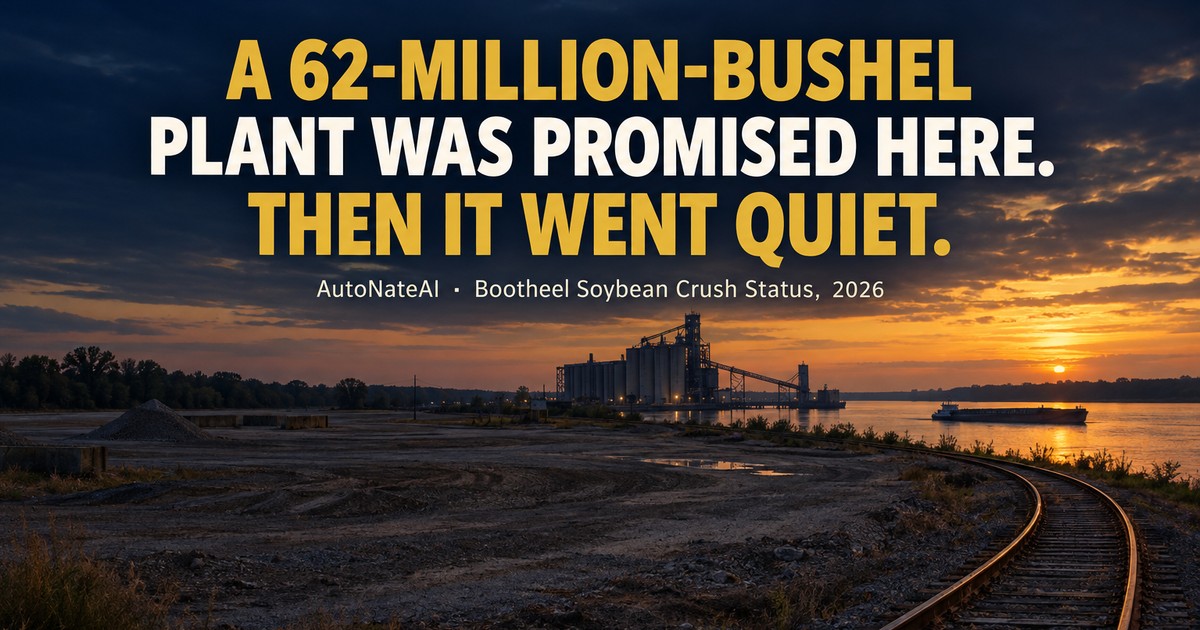
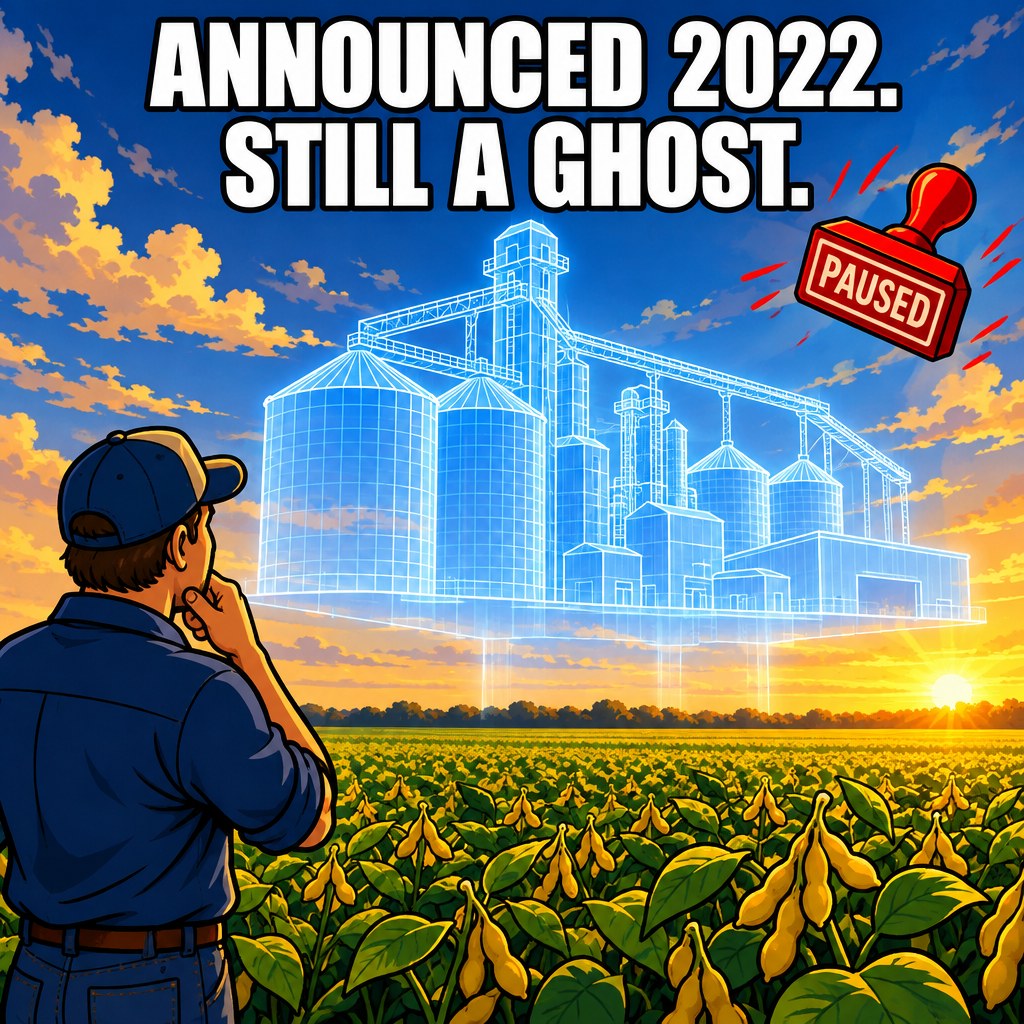
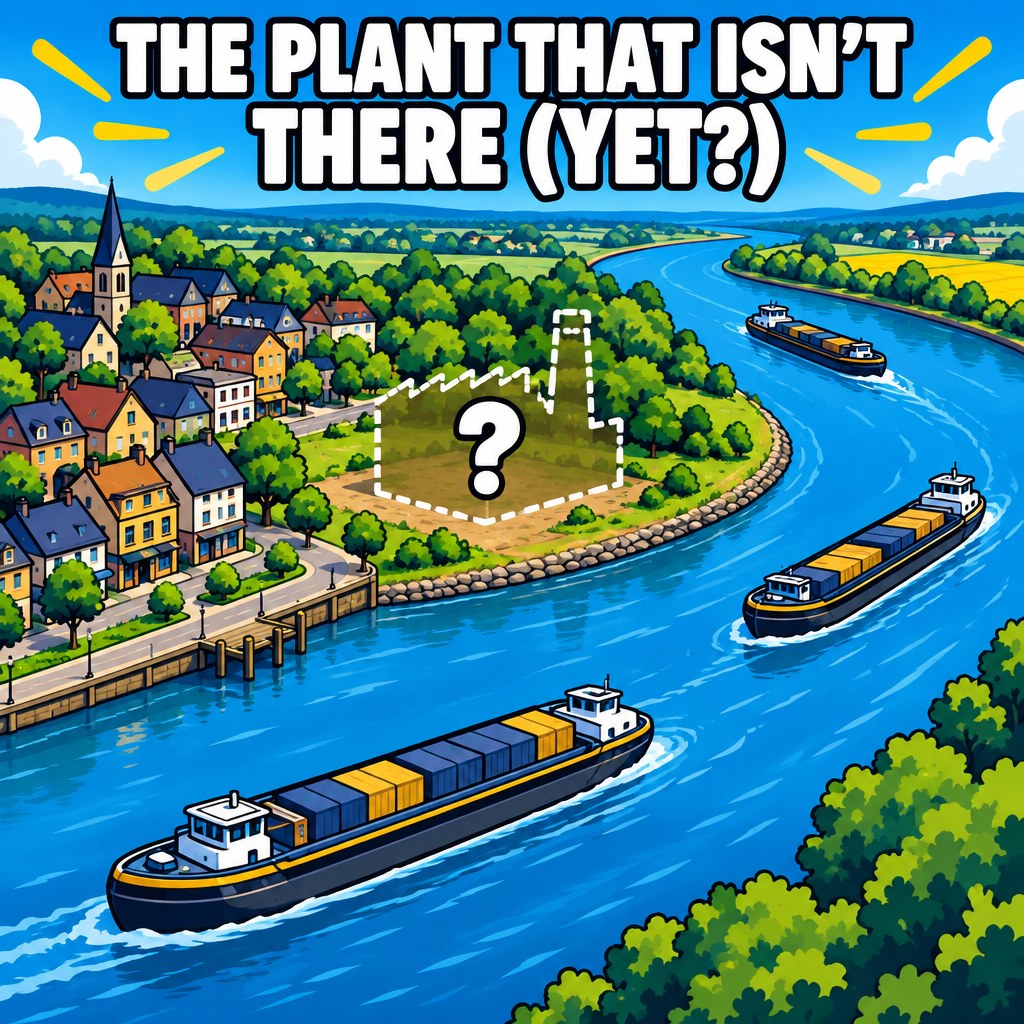
I went looking for the current status of Cargill's Pemiscot County soybean crush plant, and here's the honest answer: nobody's said anything public about it since June 2023. Cargill announced the 62-million-bushel-a-year facility near Caruthersville in May 2022, said it would break ground in early 2023 and open in 2026, then paused it a year later citing "shifting market dynamics" — no updated timeline given then, and none found in this pass either. What I can tell you is what's real regardless of the plant's fate (the port infrastructure it would have plugged into is sitting there right now, fully capable), and what just changed nationally that could plausibly move the needle on whether it ever gets built: EPA finalized a record-high biofuel mandate this spring that the agency itself says is meant to drive "renewed demand for domestic soybean production." Whether that's enough to unpause a specific plant in Pemiscot County is not something anyone has said publicly. Status: investigating.
Why This Site Exists on Land That Was Once Underwater
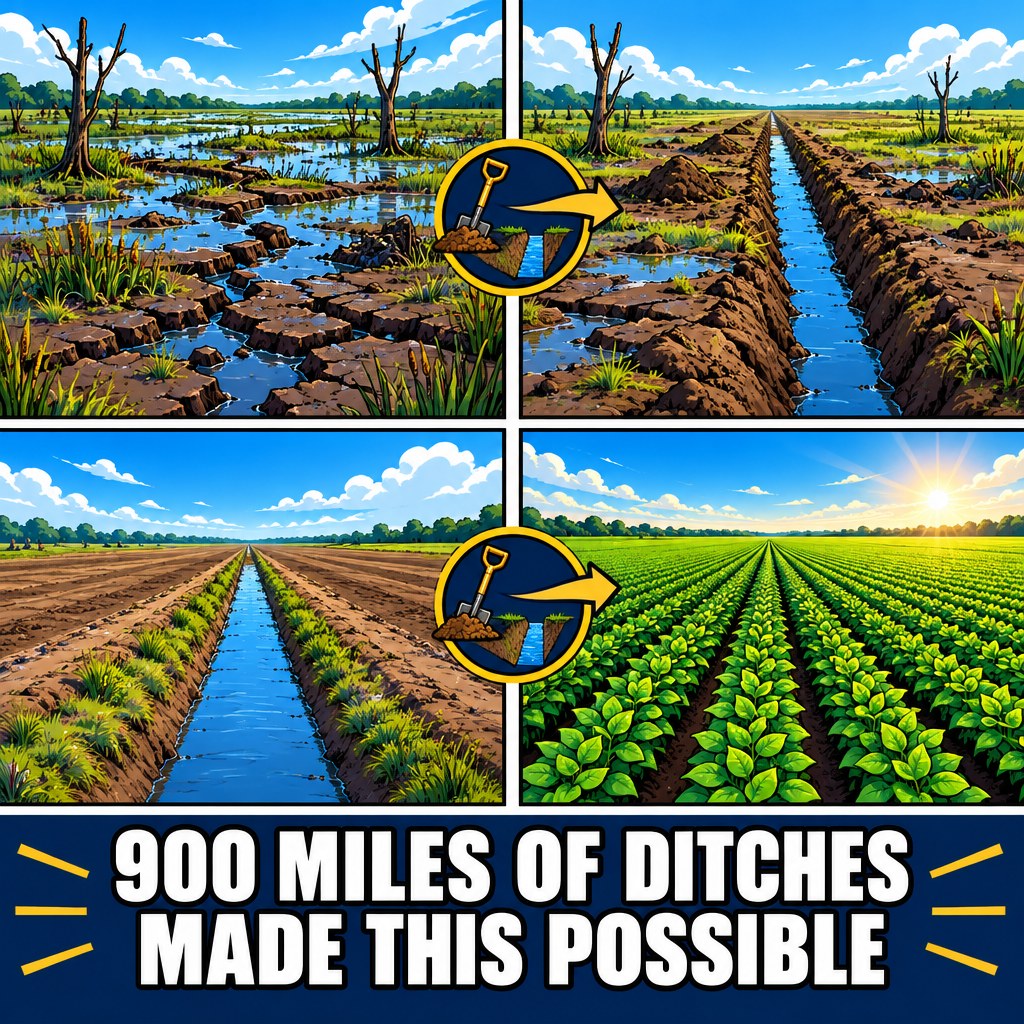
You can't understand why a 62-million-bushel processing plant made sense to announce in Pemiscot County without understanding what the county used to be. Most of Southeast Missouri's Bootheel was swampland — the "Sunk Lands," created when the 1811-12 New Madrid earthquakes dropped huge sections of the region below the water table — until the Little River Drainage District, chartered in 1907, dug more than 900 miles of ditches and channels to drain roughly 1.2 million acres into some of the flattest, most fertile row-crop ground in the country. That drainage project is the entire reason Pemiscot County has the soybean acreage to feed a crush plant in the first place, and it's also why the county sits on the Mississippi River with the kind of barge access that made it attractive to a company like Cargill a century later. The Pemiscot County Port Authority runs a slackwater, ice-free harbor 4,680 feet long with a 300-foot turning basin at Caruthersville, a five-mile Burlington Northern Santa Fe rail spur, three-phase electric power, natural gas, public water and sewer, broadband, and 30 acres of ready building sites plus adjacent greenfield acreage — all of it already in place, none of it built specifically for Cargill. (Missouri Port Authorities — Pemiscot County)
How This Connects
open_with Drag nodes to rearrange, tap one for the evidence behind it — pinch or scroll to zoom.
Drag this one around and read the two dashed edges carefully — they're doing the real work of this article. The solid edges are a normal capacity-expansion story: federal biofuel policy drove demand, demand drove a three-plant capacity wave, and Cargill picked Pemiscot County partly because the port infrastructure was already sitting there. The dashed edges are where honesty requires me to stop short of a conclusion: it's plausible that a disappointing 2023 RFS rule contributed to the pause, and it's plausible that this spring's much larger 2026-2027 mandate changes the math on restarting — but Cargill has never said either thing publicly, and I'm not going to dress up a good guess as a finding.
The Policy Lever That Pointed Two Different Directions in Four Years
Here's the tension worth sitting with: the same federal policy tool built this plant's original business case and then, on the same axis, plausibly undercut it. In July 2023, EPA's final Renewable Fuel Standard rule set biomass-based diesel volumes at 2.82 billion gallons for 2023 and 3.04 billion gallons for 2024 — increases, but ones the American Farm Bureau Federation characterized as "short of expectations" relative to what the industry had built capacity for during the 2022 boom. (American Farm Bureau Federation — RFS Final Rule 2023-2024-2025 Analysis) Cargill's pause was reported one month before that final rule, so I can't tell you the rule caused the pause — but the direction of disappointment was already visible in the proposed version, and the timing sits right on top of it.
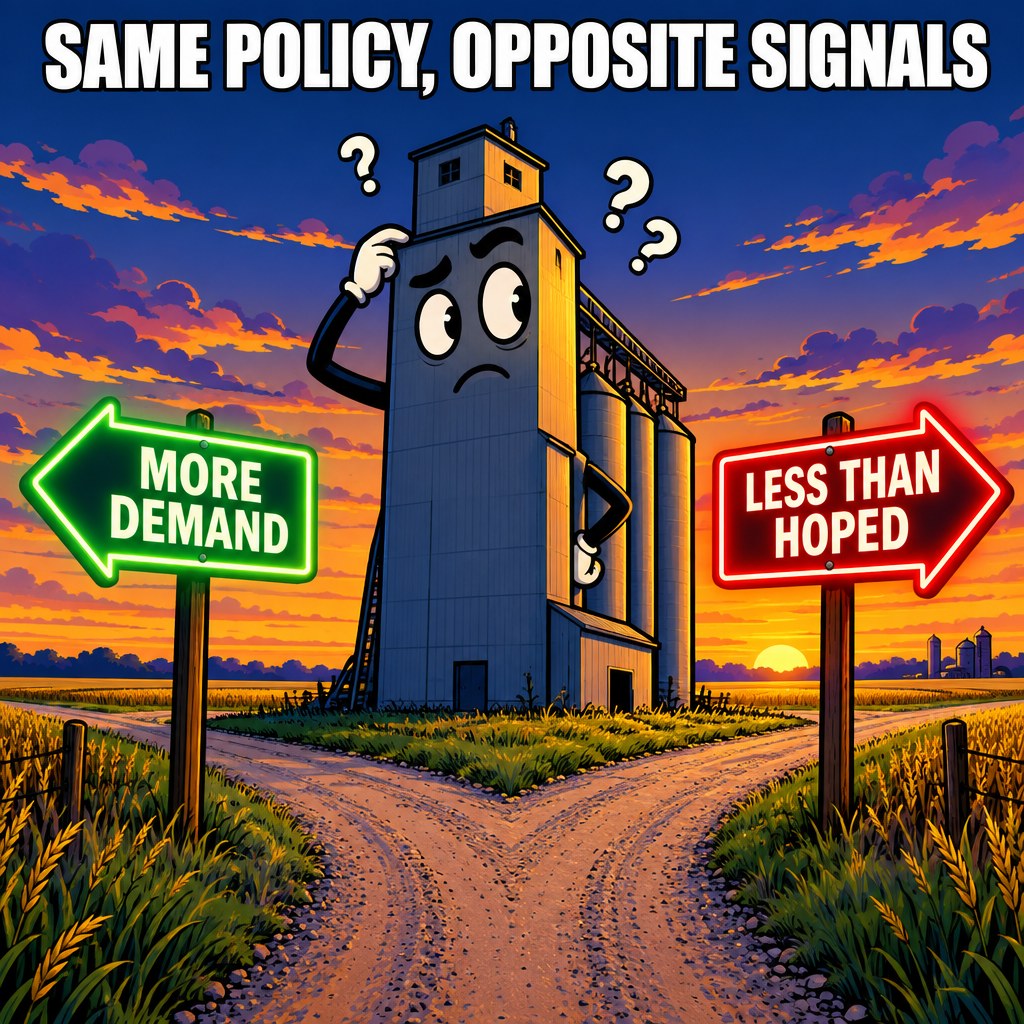
Then the same lever swung hard the other way. EPA finalized its 2026-2027 Renewable Fuel Standard rule on March 27, 2026 (published in the Federal Register April 1, 2026, effective June 15, 2026), requiring 5.33 billion gallons of biomass-based diesel use in 2026 and 5.75 billion gallons in 2027 — up from 3.35 billion gallons in 2025, roughly a 60% jump — and EPA's own announcement framed the increase around "renewed demand for domestic soybean production." (Holland & Knight — EPA Boosts Biofuel Mandates in Final RFS Rule for 2026-2027) If a lower-than-hoped mandate in 2023 made a new 62-million-bushel crush plant look like excess capacity, a mandate that's 60% larger three years later is at least a real, dated, sourced reason someone at Cargill might be running the numbers on Pemiscot County again. That's a hypothesis, clearly labeled as one, sitting on top of two real government rulemakings.
The Numbers So Far
Two honest bars and one real five-year line — that's what's actually documented. What isn't documented anywhere I could find: Cargill's specific investment figure for the Pemiscot County plant (never disclosed in the original announcement), current 2026 procurement-radius or basis assumptions, or any dollar figure tied to public infrastructure spending specifically earmarked for this project. I looked for a widely-cited claim that Missouri committed roughly $4 million in ARPA funds toward rail and electric extensions tied to this plant, and I could not independently verify it against a primary Missouri ARPA or Pemiscot County source in this pass — so it stays out of this article rather than getting repeated as fact.
Where This Is Happening
Both points sit inside the same nine-county Southeast Missouri soybean-growing footprint Cargill's own announcement referenced — plus southern Illinois, western Kentucky, western Tennessee, and northern Arkansas — a region the announcement said produces nearly 62 million bushels of soybeans a year on its own, which is exactly the plant's rated capacity. That's not a coincidence; it's the whole point of siting a crush plant here instead of somewhere else.
Methodology
This pass relied on Cargill's own May 2022 announcement (via the Missouri Department of Economic Development's press release, since Cargill's own release returned an access error on this pull), the Feed & Grain and Brownfield Ag News reporting of the June 2023 pause, DTN/Progressive Farmer's May 2022 reporting on the broader soy-crush capacity wave, the Pemiscot County Port Authority's public infrastructure pages (via the Missouri Port Authorities association mirror), the American Farm Bureau Federation's analysis of EPA's 2023 RFS final rule, and Holland & Knight's analysis of EPA's April 2026 RFS final rule. It does not include: any confirmed 2024-2026 statement from Cargill about the project's status, a verified public-infrastructure dollar figure tied specifically to this project (the widely-repeated ~$4 million ARPA rail/electric claim could not be independently verified this pass), current local soybean basis data, Pemiscot County Port throughput figures, or a single direct conversation with Cargill, Missouri Soybeans, the Port Authority, or a Bootheel grower or lender. Every one of those is a real next step, not an afterthought — starting with a direct status inquiry to Cargill and Missouri Soybeans, since a phone call could resolve in one afternoon what six web searches could not.

Moral of the Story
The headline fact here is genuinely unresolved, and that's worth taking seriously rather than smoothing over: a 62-million-bushel processing plant that was supposed to be operating by now has had no public status update in over three years. A few concrete things fall out of that for different readers:
- If you're a Bootheel soybean grower or marketer, don't build a 2026 or 2027 marketing plan around the assumption of a new local crush buyer — there is no public evidence this plant is any closer to opening than it was in June 2023. If you've heard something more current through local channels, that's worth more than anything in this article; consider it the thing to go verify.
- If you're Pemiscot County economic development or the Port Authority, the actual infrastructure — the rail spur, the power, the water/sewer, the harbor, the 30 acres of ready sites — exists today, independent of Cargill's decision. That's a marketable asset to other prospects right now, not something that should sit reserved indefinitely for one company's paused project.
- If you're a lender financing Bootheel row-crop operations, "paused" is a different underwriting fact than "cancelled" — ask growers directly whether their crop-mix and marketing assumptions quietly depend on a processor that doesn't exist yet.
- If you're tracking federal biofuel policy, the RFS just moved from a rule the industry called disappointing to one EPA explicitly tied to new soybean demand, in under three years. That's the kind of federal-policy whiplash worth watching for its effect on stalled capacity projects generally, not just this one plant.
The honest version of "what would change if it returns" is: freight patterns, soybean basis, working-capital timing, and crop-mix incentives across a nine-county footprint — but naming that mechanism isn't the same as knowing whether it's about to happen. Someone at Missouri Soybeans or Cargill knows the real answer. As of this research pass, it isn't public.

Related Research
This investigation shares a region and a grower base with Congress Just Made Rice More Profitable. So Why Are Bootheel Farmers Planting Less of It? and Farm Credit SEMO's Crop Loan Stress Is Rising. What Is Driving It? — the structured fields below (who we'd like to talk to, what we still need, our sources) carry the parts of this investigation that update independently of the write-up above.
Where This Stands
Investigating
Our Best Guess So Far
If the plant remains paused, the Bootheel still has a measurable infrastructure-and-market-access gap that existing port capacity alone doesn't close; if it restarts, local crush demand could meaningfully alter soybean basis, barge/rail flows, crop incentives, and working-capital risk — but direction and magnitude both require a current status update and throughput evidence this pass doesn't have. This is a hypothesis to test against direct confirmation from Cargill or Missouri Soybeans, not a conclusion.
What Got Us Asking This
- linkMissouri Department of Economic Development — Caruthersville selected for new Cargill soybean processing facility — May 17, 2022 announcement: 62 million bushels/year capacity, 45 full-time jobs paying more than double the county average, groundbreaking targeted early 2023, operations targeted 2026.
- linkFeed & Grain — Cargill soybean processing project on hold — June 8, 2023: a Cargill spokesperson attributed the pause to "many shifting market dynamics," with no updated completion timeline given.
- linkDTN/Progressive Farmer — Soaring Soy Crush Spawns Opposition and Benefits — May 2022: Cargill's plant was one of three announced within months of each other (alongside North Dakota Soybean Processors and Shell Rock Soy Processing, IA) in a renewable-diesel-driven capacity wave totaling roughly 143 million new bushels/year.
- linkHolland & Knight — EPA Boosts Biofuel Mandates in Final RFS Rule for 2026-2027 — EPA finalized biomass-based diesel volumes of 5.33B gallons (2026) and 5.75B gallons (2027), up from 3.35B gallons in 2025 (~60% increase), published April 1, 2026, citing "renewed demand for domestic soybean production."
How This Connects
The Physical Side
Pemiscot County Port's existing slackwater harbor, 5-mile BNSF rail spur, 3-phase power, natural gas, water/sewer, and broadband sit ready in Caruthersville today, independent of whether Cargill's plant ever opens.
The Money Side
Cargill never disclosed a project investment figure; a widely-repeated ~$4M Missouri ARPA rail/electric claim could not be independently verified this pass and is deliberately left out of the article rather than repeated as fact.
The Day-to-Day Work
Cargill, Missouri Soybeans, the Pemiscot County Port Authority, CGB, and Bootheel growers/lenders all sit on different sides of one unresolved status question that a single phone call could likely answer.
The Data/Systems Side
No public dataset tracks this project's live status — the last public statement is from June 2023. This site's own periodic check is effectively the only public tracker right now.
Who We'd Like to Talk To
- Bootheel soybean growers
- Cargill
- Missouri Soybeans
- Pemiscot County Port Authority
- CGB (Consolidated Grain & Barge)
- Farm Credit Southeast Missouri
- local economic development organizations
What We Still Need
- Any 2024-2026 public statement from Cargill or Missouri Soybeans on the project's current status
- A verified public-infrastructure dollar figure tied specifically to this project, if one exists
- Current local soybean basis data for the Caruthersville/Hayti area
- Pemiscot County Port throughput and CGB grain-handling volume
- A direct conversation with Cargill, Missouri Soybeans, the Port Authority, or a Bootheel grower or lender — zero interviews conducted so far
What We'll Build From This
- Bootheel Market Geometry Explorer — an OFF/ON processor-status scenario model showing how local soybean basis, freight routing, and procurement radius would change if the plant activates
Sources
- linkMissouri Department of Economic Development — Cargill announcement
- linkFeed & Grain — Cargill soybean processing project on hold
- linkBrownfield Ag News — MO soy crush plant project is on hold
- linkDTN/Progressive Farmer — Soaring Soy Crush Spawns Opposition and Benefits
- linkMissouri Port Authorities — Pemiscot County port profile
- linkMissouri Department of Agriculture — Grain Regulatory Services / licensed dealer database
- linkAmerican Farm Bureau Federation — RFS Final Rule 2023-2024-2025 Analysis
- linkHolland & Knight — EPA Boosts Biofuel Mandates in Final RFS Rule for 2026-2027
- linkLittle River Drainage District — official history