Texas High Plains Cotton Yield Is Forecast Down 15.8%. Who Absorbs the Drought Shock?
With Texas cotton yield forecast 15.8% below 2025 and High Plains drought driving the decline, how does lost production propagate through growers, gins, cooperatives, warehouses, lenders, groundwater systems, and value-added cotton research?
Short Answer
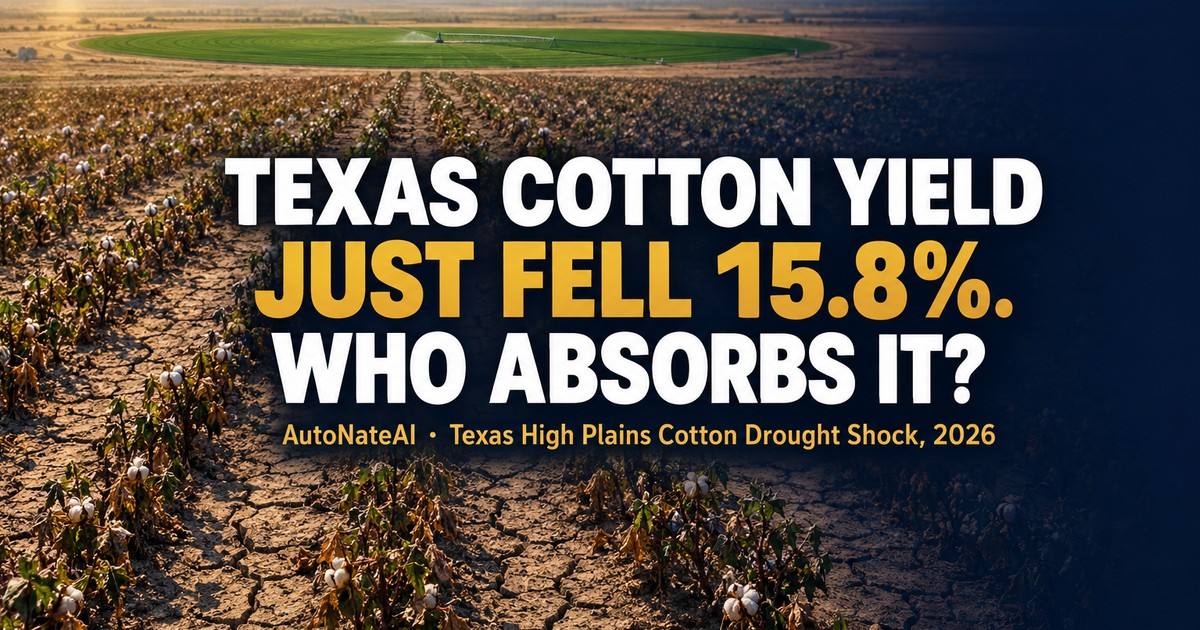
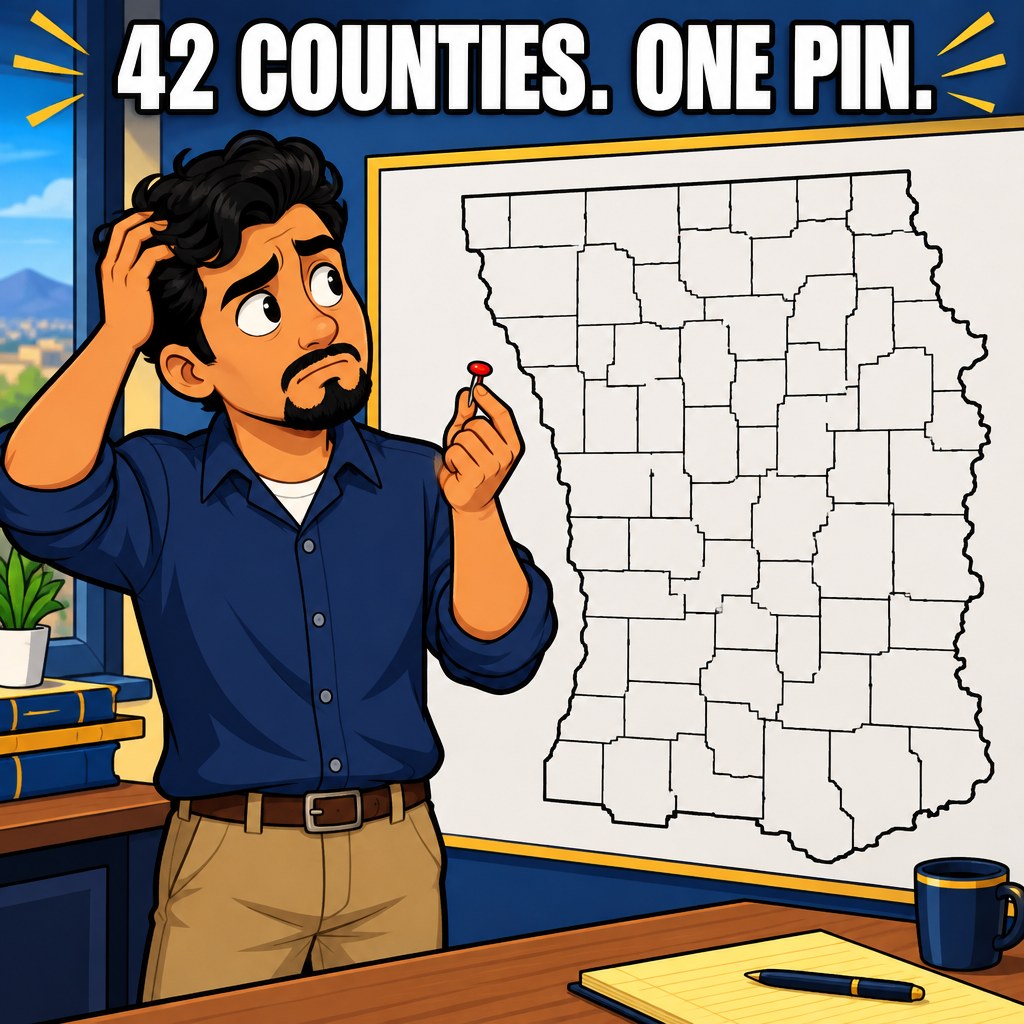
USDA's September WASDE puts Texas's 2026 cotton yield 15.8% below last year — nearly double the 9.0% national decline — and names High Plains drought as the main driver. That's a real, verified, state-level number. What it can't tell you is who actually eats that loss: a dryland grower who watched a field get declared a total failure and a grower on a center-pivot who spent real money pumping the Ogallala Aquifer harder to keep a crop alive are both counted in the same statewide average, but they're living through completely different years. Ninety-three percent of Texas is in some stage of drought right now, and roughly 10% of the state's 3.7 million reported dryland crop acres had already been declared failed as of September 11. What I don't have yet — because it isn't public at this resolution — is which of the Texas High Plains' 42 cotton counties are absorbing the worst of it, and how that maps onto gin throughput, cooperative marketing volume, and lender risk. Status: investigating.
Why Cotton Runs on Water Nobody Can See
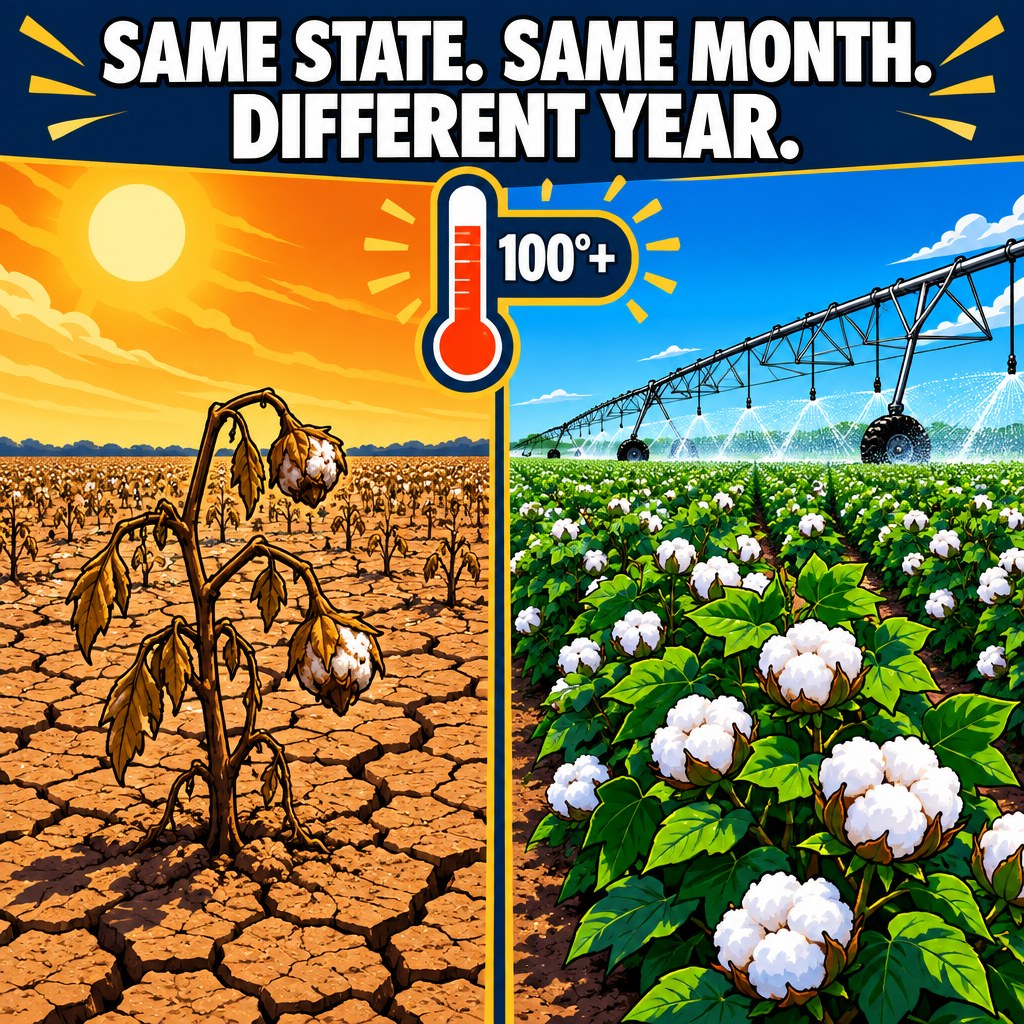
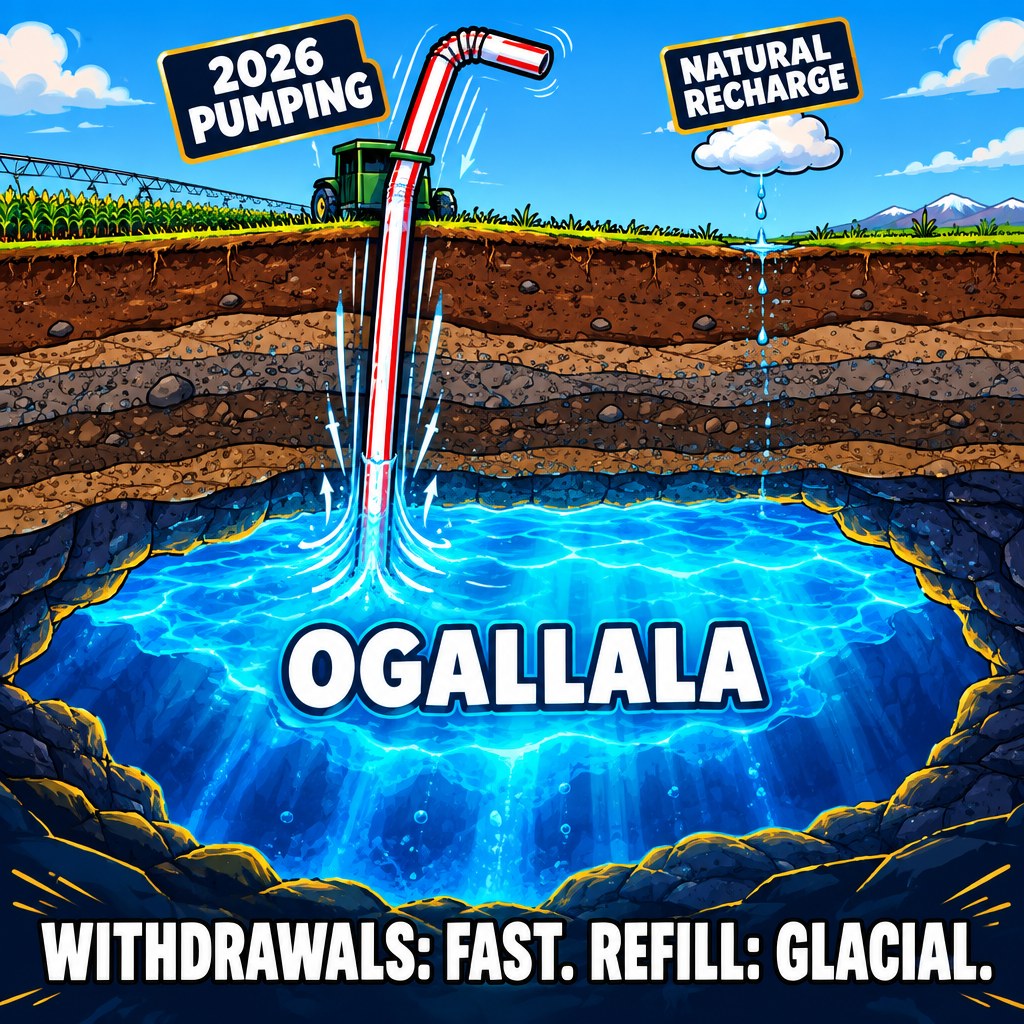
The Texas High Plains wasn't always cotton country. For most of the 20th century's first half, this was semi-arid rangeland — until farmers discovered they were sitting on top of the Ogallala Aquifer, a massive underground water reserve stretching across eight states, and center-pivot and furrow irrigation turned dry range into the largest contiguous cotton-growing region in the country. By 2021, eight of the nation's top ten cotton-producing counties sat inside this same footprint, and Lynn County alone produced 425,200 bales. (Plains Cotton Growers — Who We Are) Plains Cotton Growers, the 42-county producer organization serving this region, was itself founded in 1956 — organized around exactly this irrigation-fed boom. Today the High Plains Underground Water Conservation District, created in 1951 as the first groundwater district in Texas, oversees 15 of those counties: roughly 2 million irrigated acres draw on the Ogallala, and about 95% of the water pumped from it goes to irrigated agriculture. (Texas State Historical Association — High Plains Underground Water Conservation District) The entire regional cotton economy — the gins, the co-op warehouses, the 42-county association itself — exists because of water that took thousands of years to accumulate underground and doesn't refill at anywhere near the rate it's being pumped out.
How This Connects
open_with Drag nodes to rearrange, tap one for the evidence behind it — pinch or scroll to zoom.
Look at where the solid lines stop. Drought verifiably drives the state yield number, the dryland failure number, the irrigated-stress reporting, and the federal disaster designation — four separate, independently-sourced confirmations of the same underlying shock. What isn't yet verified is the next link in the chain: how much of that shock actually reaches a gin's throughput, a cooperative's marketing volume, or a lender's risk file. That's the gap this investigation exists to close.
The Water District Whose Job Is to Slow Down the Thing Everyone Needs Right Now
Here's the tension that doesn't get said out loud often enough: the High Plains Underground Water Conservation District's entire reason for existing is to make the Ogallala last longer than it otherwise would — and a severe drought year is exactly when the short-run incentive to ignore that runs hardest against the long-run mandate to honor it. A grower staring at a cotton crop wilting under 100°+ heat and half-an-inch-a-day water demand isn't thinking about 2050 aquifer levels; they're thinking about this year's revenue. HPWD doesn't set a simple do-this-or-else rule that resolves that tension — it manages permits, spacing rules, and voluntary conservation programs (including a cloud-seeding effort aimed at boosting recharge) across a district whose own founding purpose is explicitly to slow a depletion trend that's been running since before most of today's growers started farming. (Texas State Historical Association) That's not a contradiction anyone's hiding — it's the actual, structural hard part of managing a shared resource that doesn't refill on a human timescale, showing up hardest in exactly the years when growers need it most.

Meanwhile, the more immediate federal lever actually moved on September 14, 2026: USDA designated three Texas counties as primary natural disaster areas, triggering fast-track eligibility for FSA emergency loans, with additional contiguous counties made eligible for the same relief. (USDA Farm Service Agency, Sept 14 2026) That's real, current, actionable relief — but it's a credit lifeline, not a water solution. A grower can borrow their way through one bad year; nothing in that designation touches the aquifer math underneath it.
The Numbers So Far
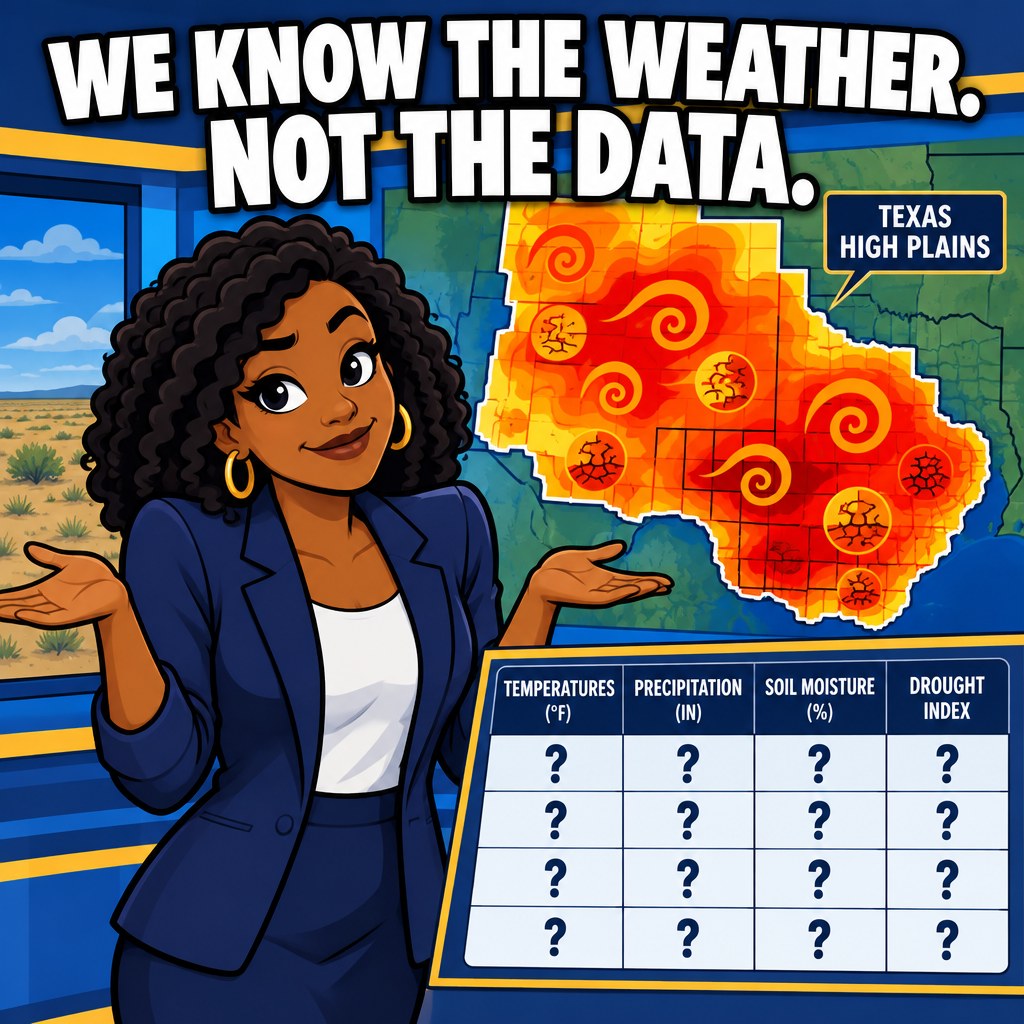
Both numbers are real and both are limited in the same way: they're state-level. Neither tells you whether Hockley County — one of the counties USDA's September designation made newly eligible for emergency FSA credit, and squarely inside Plains Cotton Growers' 42-county territory — lost 5% of its cotton or 50% of it. That county-level resolution is exactly what this investigation still needs.
Where This Is Happening
Lubbock sits at the institutional center of this system — the growers' association, the marketing cooperative, and the university fiber-research institute are all headquartered within a few miles of each other — while the actual drought damage is distributed across 42 surrounding counties at wildly different severities that this article can't yet resolve county by county.
What's Actually Happening on the Ground Right Now
Texas A&M AgriLife's own county reporting gives one specific, human-scale data point worth sitting with: extension agronomist Kevin Heflin, describing this year's High Plains stretch, said "daily water demand has been as high as half an inch per day during 100-plus degree stretches" — a rate that leaves, in his words, little hope for drought-stressed summer forage crops. (Texas A&M AgriLife Today, Sept 15 2026) Half an inch of water a day, every day, through a heat stretch, is not a number a center-pivot system built for a normal year was necessarily sized to deliver sustainably — which is exactly the kind of on-the-ground detail a statewide yield percentage can't carry on its own.
Methodology
This pass relied on Texas A&M AFPC's analysis of USDA's September 2026 WASDE (via reporting, since AFPC's own site wasn't directly pulled this round), Texas A&M AgriLife Today's September 15, 2026 drought reporting, USDA's Farm Service Agency September 14, 2026 disaster designation announcement, Plains Cotton Growers' and Plains Cotton Cooperative Association's own "who we are" pages, the Texas State Historical Association's history of the High Plains Underground Water Conservation District, and Texas Tech's Fiber and Biopolymer Research Institute's public pages. It does not include: county-level 2026 failed-acreage or harvested-yield data for any of Plains Cotton Growers' 42 counties, gin-level throughput or utilization figures, crop-insurance indemnity data, HPWD's own 2026 permitting or pumping data, or a single direct conversation with a High Plains grower, gin manager, PCG/PCCA staff member, or HPWD official. The full list of counties covered by the September 14 FSA designation and its contiguous-eligibility list wasn't fully confirmed against a primary source this pass — worth a direct pull from FSA's Texas state office before this investigation goes further.
Moral of the Story
The state number is real, and it's worse than the national one — that much is settled. What isn't settled yet is where, specifically, in the 42-county High Plains footprint the loss is landing hardest, and that gap matters differently depending on who's reading this:
- If you're a High Plains cotton grower, the FSA's September 14 disaster designation and its contiguous-county eligibility list is worth checking directly and by name for your county — fast-track emergency credit access is exactly the kind of relief that's easy to miss if you're not watching for it.
- If you're a gin manager or PCCA member, this is the year to actually track and report your own throughput numbers somewhere public or semi-public — right now, nobody outside your own operation can see whether your county is a 5% year or a 50% year, and that data gap is exactly what turns a real regional story into a vague statewide one.
- If you're a lender financing High Plains cotton operations, "state yield down 15.8%" is not a county-level underwriting number — ask growers directly whether they were dryland or irrigated this year, and whether they fall inside the newly-designated disaster counties.
- If you're thinking about water policy, this year is a live example of the exact tension HPWD was built to manage: short-run survival pressure against a long-run resource that doesn't forgive overdraft. That tension isn't going away because one drought year ends.
None of that is a conclusion this investigation can hand you yet — it's the map of exactly where the next round of research needs to go.
Related Research
This investigation sits alongside The High Plains Got One Wet Year. Did It Actually Buy Farmers Time? in tracking the same Ogallala-dependent water system from a different angle and a different year's conditions — the structured fields below (who we'd like to talk to, what we still need, our sources) carry the parts of this investigation that update independently of the write-up above.
Where This Stands
Investigating
Our Best Guess So Far
The drought shock is not evenly distributed across the High Plains: dryland abandonment, irrigated pumping cost, gin utilization, and cooperative marketing volume likely create distinct county-level incidence paths that a state-level yield number can't reveal. This is a hypothesis to test against county-level acreage, gin-throughput, and lender data, not a conclusion.
What Got Us Asking This
- linkTexas A&M AFPC / AgriLife — September 2026 WASDE analysis — Texas cotton yield forecast 15.8% below 2025, nearly double the 9.0% national decline, with High Plains drought named as the primary driver.
- linkUSDA Farm Service Agency — Three Texas Counties Natural Disaster Designation — September 14, 2026: three Texas counties designated primary natural disaster areas under fast-track drought criteria, with additional contiguous counties made eligible for emergency credit.
- linkPlains Cotton Growers — Who We Are — 42-county Texas High Plains producer organization; the region produces 66% of Texas cotton and cottonseed and roughly 30% of the nation's; 8 of the top 10 U.S. cotton counties sit inside this footprint.
How This Connects
The Physical Side
Drought propagates through dryland abandonment (~10% of 3.7M TX acres already failed) and harder irrigated pumping from the Ogallala Aquifer, then downstream into 42 counties' worth of gin and cooperative-warehouse throughput that isn't yet publicly quantified at that resolution.
The Money Side
USDA FSA's September 14 disaster designation opens fast-track emergency credit for affected counties; the deeper capital question — how this year's volume shock hits gin/co-op working capital and lender risk — remains unmeasured publicly.
The Day-to-Day Work
Plains Cotton Growers (42 counties), Plains Cotton Cooperative Association (farmer-owned marketing/warehousing), and Texas Tech's FBRI (fiber/biopolymer research) all sit on different sides of the same regional cotton system.
The Data/Systems Side
No public dataset yet joins 2026 county-level failed/harvested acreage, gin throughput, and HPWD pumping data for the High Plains — that join is exactly what this investigation is built toward.
Who We'd Like to Talk To
- Texas High Plains cotton growers
- Plains Cotton Growers
- Plains Cotton Cooperative Association
- regional cotton gins
- High Plains Underground Water Conservation District
- Texas Tech Fiber and Biopolymer Research Institute
- agricultural lenders
- crop insurers
What We Still Need
- County-level 2026 failed/harvested cotton acreage across Plains Cotton Growers' 42 counties
- Gin-level throughput and utilization figures
- Crop-insurance indemnity data by county
- HPWD's 2026 permitting/pumping data
- A direct conversation with a High Plains grower, gin manager, PCG/PCCA staff member, or HPWD official — zero interviews conducted so far
What We'll Build From This
- Texas Cotton Shock Propagation GIS — a county-level failed-acreage and gin-catchment model with a water-risk overlay
Sources
- linkTexas A&M AgriLife Today — Tough Year for Texas Summer Crops
- linkOklahoma Farm Report — September WASDE cotton yield figures
- linkUSDA Farm Service Agency — Three Texas Counties Natural Disaster Designation
- linkPlains Cotton Growers — Who We Are
- linkPlains Cotton Cooperative Association — About PCCA
- linkTexas State Historical Association — High Plains Underground Water Conservation District
- linkTexas Tech Fiber and Biopolymer Research Institute