Every claim checked
Math is worked and verified; numbers are labeled sourced or illustrative; fiction is labeled as fiction.
Before we write a line of dialogue, we map the subject: what's true, what's commonly misunderstood, what the audience already knows, and what they'll recognize. Here's the research behind each series, and how we work.
Math is worked and verified; numbers are labeled sourced or illustrative; fiction is labeled as fiction.
Each series ships a source list, in the descriptions and the learning materials.
We name real organizations, programs and places. We never portray real people or invent their words.
The most common wrong answer becomes a scene, so the viewer unlearns it on screen.
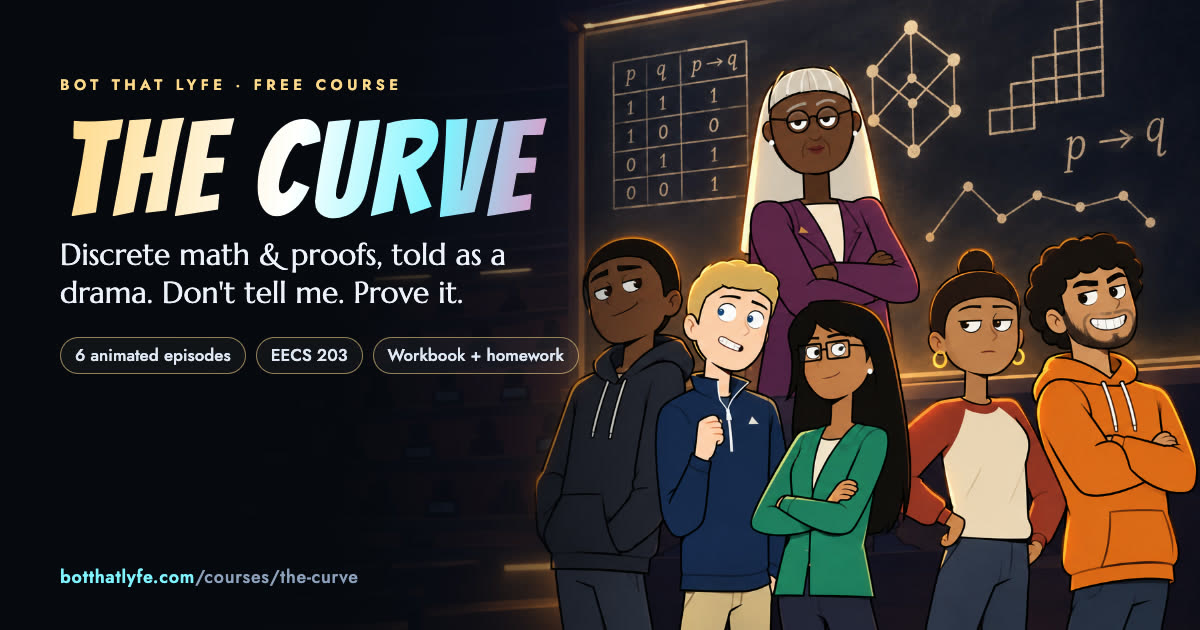
Mapped the EECS 203 syllabus (logic, proofs, sets & functions, induction, counting, graphs) to six episodes; 18 proofs worked and checked; every problem in the style of the course text.

Researched the expo program, the partner organizations and the community the students come from (housing authority programs, Blue Zones, financial-literacy expos, AI for seniors), then wrote real names and places into the dialogue so the audience hears what they know.
Built from written lessons on prompt and context engineering and relational and graph databases; each episode ties the skill to a cognitive-science finding with primary sources.
Scripture read in context, the history of how images of Christ were painted, and the science of meditation, tied to breadth-first, depth-first and A* search.
Reports, studies and programs make great series. We'll turn yours into something people watch and share.