Talk
You operate through ChatGPT or Claude. Tell it what happened, ask what's next, approve what it proposes.
ChatGPT · Claude
We install a conversational operating system around your business. You talk to ChatGPT or Claude. Your business memory stays structured underneath. A custom cockpit shows you exactly what your AI sees. We handle the engineering.

"Met Dana at the chamber mixer. She runs a 4-agent brokerage and is drowning in follow-ups. Set up a demo Thursday."
of U.S. small businesses reported using generative AI in 2025, up from 23% in 2023. U.S. Chamber of Commerce, Empowering Small Business (2025)
So the question isn't whether you use AI anymore. It's whether your business is structured so AI can operate inside it.
Small-business software arrives one tool at a time. Each tool might work fine on its own. But the owner is still the thing connecting them, carrying the state of the business around in their head.
That hidden tax doesn't show up on an invoice. It shows up as missed follow-ups, slow quotes, and evenings spent catching up.
Four layers, one shared memory. You only ever touch the top one and look at the third.
You operate through ChatGPT or Claude. Tell it what happened, ask what's next, approve what it proposes.
ChatGPT · ClaudeEvery conversation writes to one structured graph: organizations, people, relationships, goals, projects, touchpoints, tasks, research.
Structured memory · AirtableA custom cockpit renders that graph live, so you can verify what the AI sees and manage every flow in one place.
Custom web cockpitAgents do the repetitive work: research, scraping, ranking, drafting, alerts. Coding agents grow the system when you need a new feature.
Agents · Codex · Claude Codearchitecture AutoNateAI architects the whole thing: the data model, the integrations, the interface, and every feature that comes after. You bring the judgment, the relationships, and the final decisions.
The graph doesn't just store contacts. It connects every relationship to the attention it deserves.
No new software to learn. No fields to fill in. You talk the way you already talk about your business, and the system keeps the state.
"What should I build first today?"
Your AI reads the graph — open goals, waiting dependencies, last night's reflection — and answers with tomorrow's plan already routed into time blocks.
"Just got off with the HVAC guy. He wants a quote by Friday."
The touchpoint is logged, the relationship stage moves, a quote task lands on Thursday's revenue block. The cockpit updates while you're still in the truck.
"Here's how today went."
Your reflection becomes graph changes: finished work closes, stale tasks drop, and tomorrow's timebox rewrites itself around what actually happened.
The best fit isn't "a business that wants AI." It's a business where revenue, service quality, or growth is capped by scattered information and owner attention.
HVAC, electrical, plumbing, roofing, warranty contractors
Brokerages, investors, property managers, rehab operators
Consultants, agencies, small firms
Small teams running grants, programs, and referrals
Distributors, service firms, niche operators
Every discovery call walks the same three screens.
AutoNateAI runs on its own Operator OS. You see the real cockpit running a real business: prospects, goals, research threads, tomorrow's timebox.
We model your operation from what we can already observe and show you what your graph and cockpit would look like.
If it fits, we scope the build: which workflows, which integrations, which package. If it doesn't fit, we'll say so.
We research one operational bottleneck at a time: map it, put a cost on it, and show the system that absorbs it.
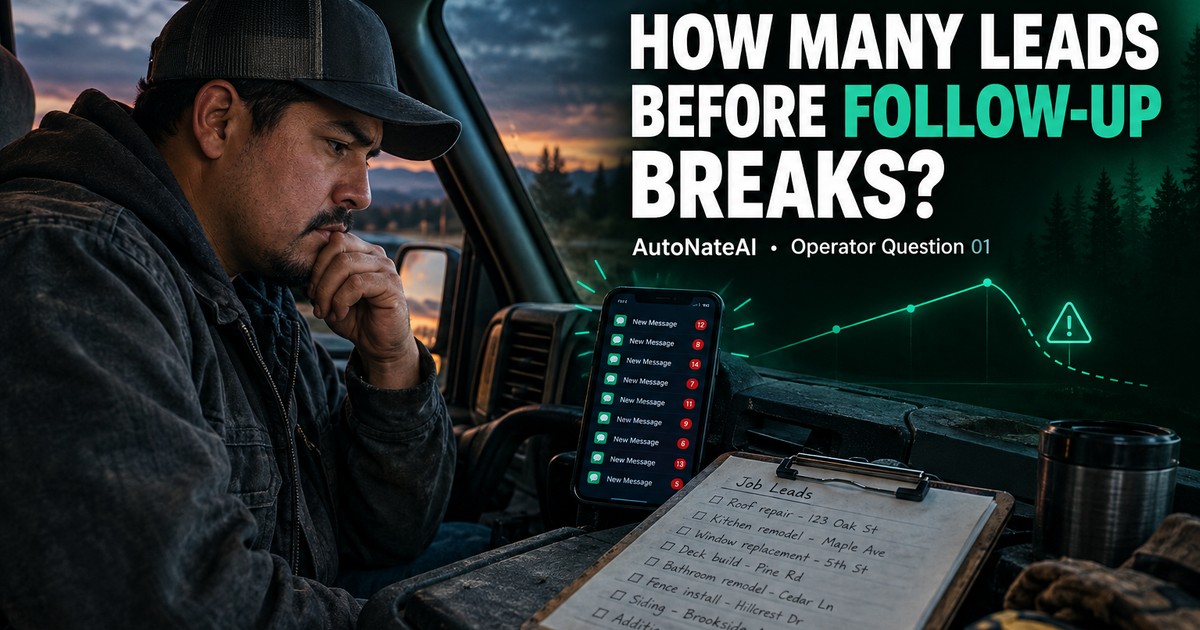 Published
For an owner-operator, follow-up starts breaking around 20–25 new leads a month. Not from lack of hustle, but because the clock and your working memory both hit their ceilings.
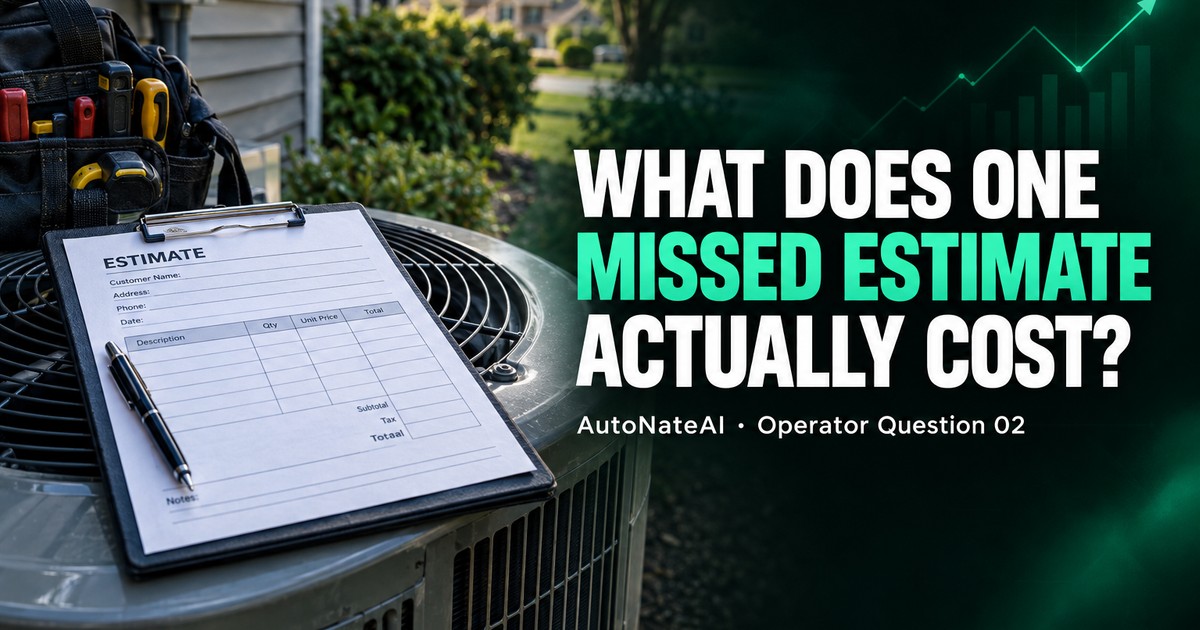 Published
A silent HVAC estimate costs about $2,900 in expected revenue: the install, the repairs, the plan, and the referral. It never shows up as a loss anywhere.
 Published
A CRM stores information. It doesn't carry it. Add one more tool that doesn't share memory and you've added pairs to reconcile, and the owner is still the integration layer.
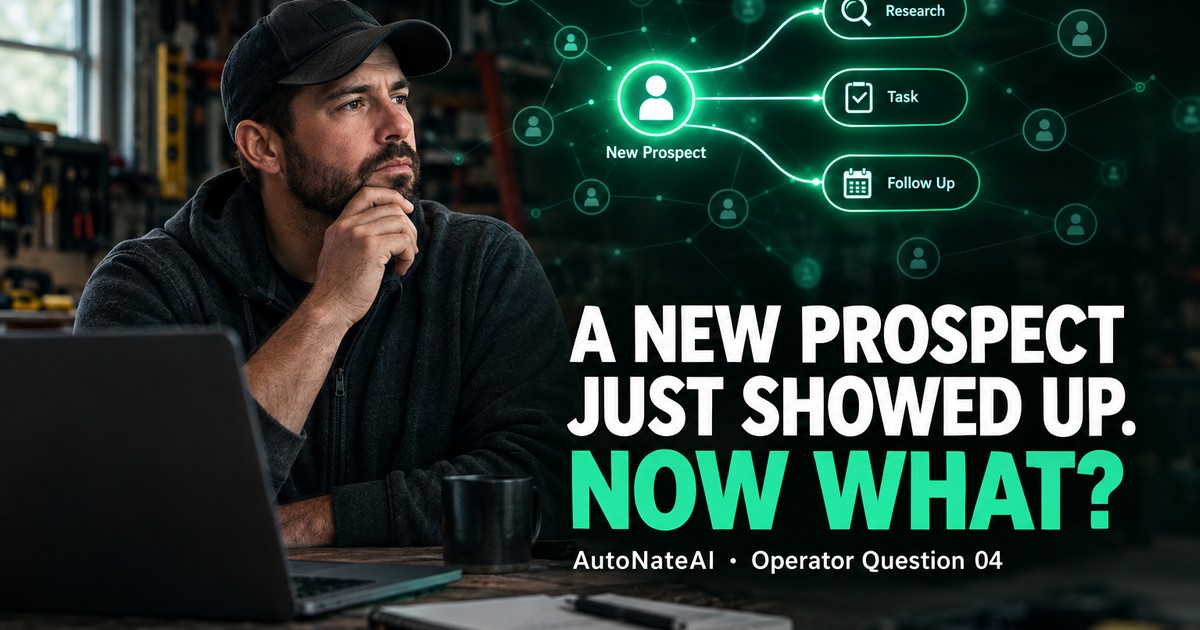 Published
Six things should happen automatically in the first 48 hours: capture, recognize, acknowledge, research, route, follow up. In most shops the owner does all six by hand, hours late.
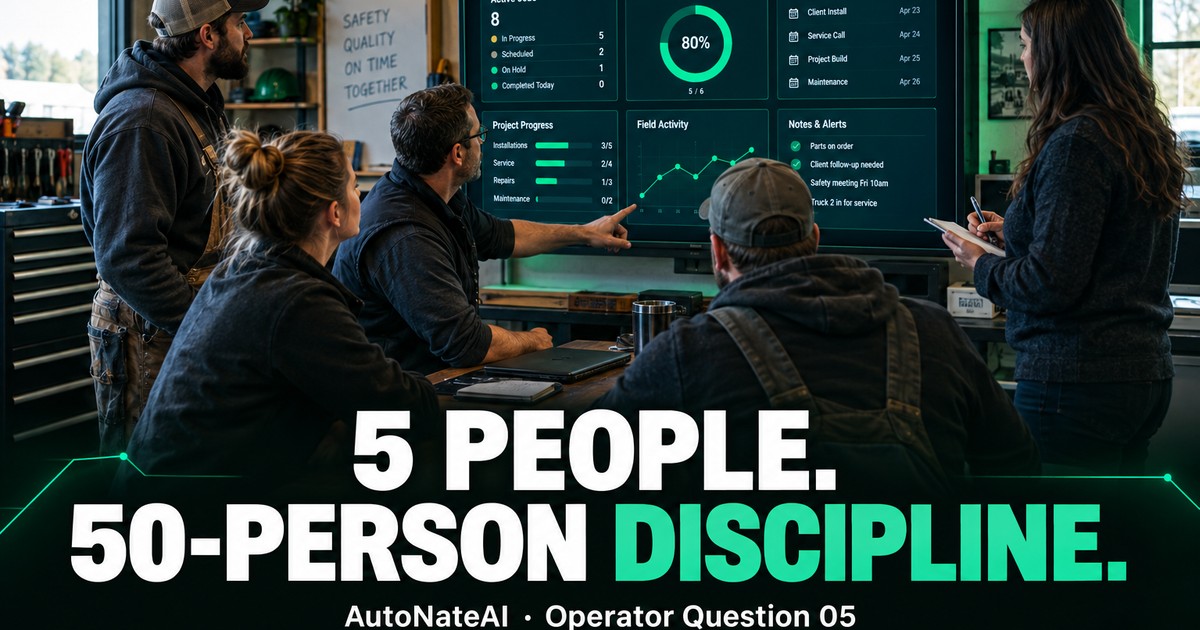 Published
Big companies pay whole teams to keep information straight. Small ones pay with the owner's evenings. AI finally makes the clerical half of that discipline affordable.
 Published
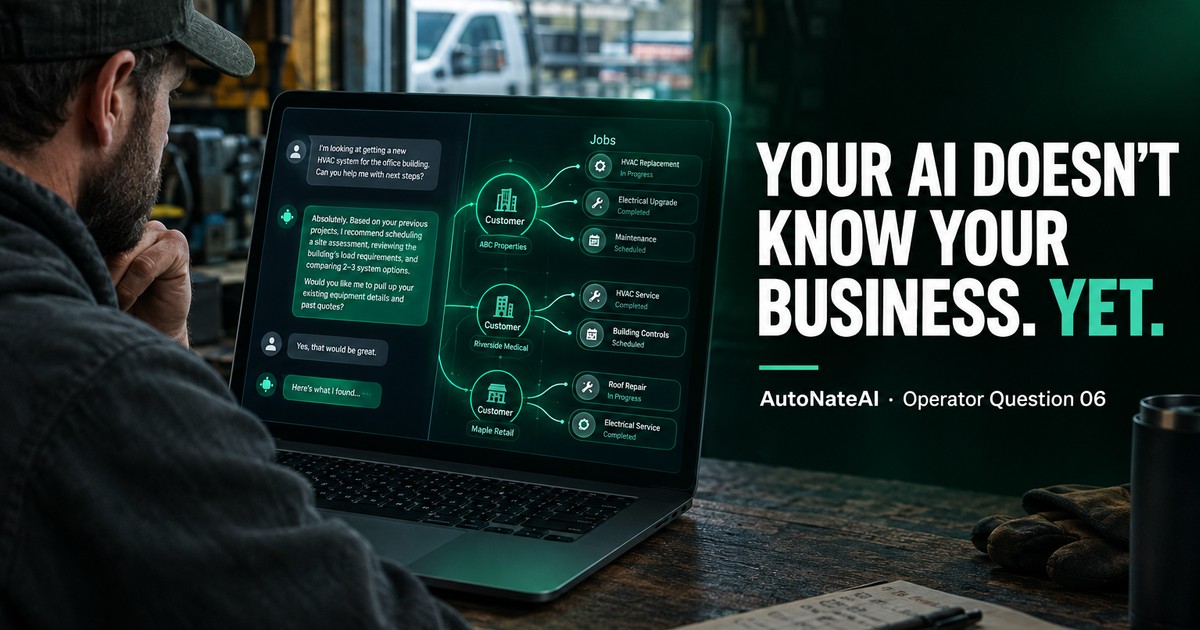
ChatGPT gives confident advice about a business it has never seen. Seven layers of context turn a generic answer into a real sales recommendation.
Twenty to thirty minutes. We'll look at where your business is carrying too much in the owner's head, show you a live cockpit, and tell you straight whether it's a fit.